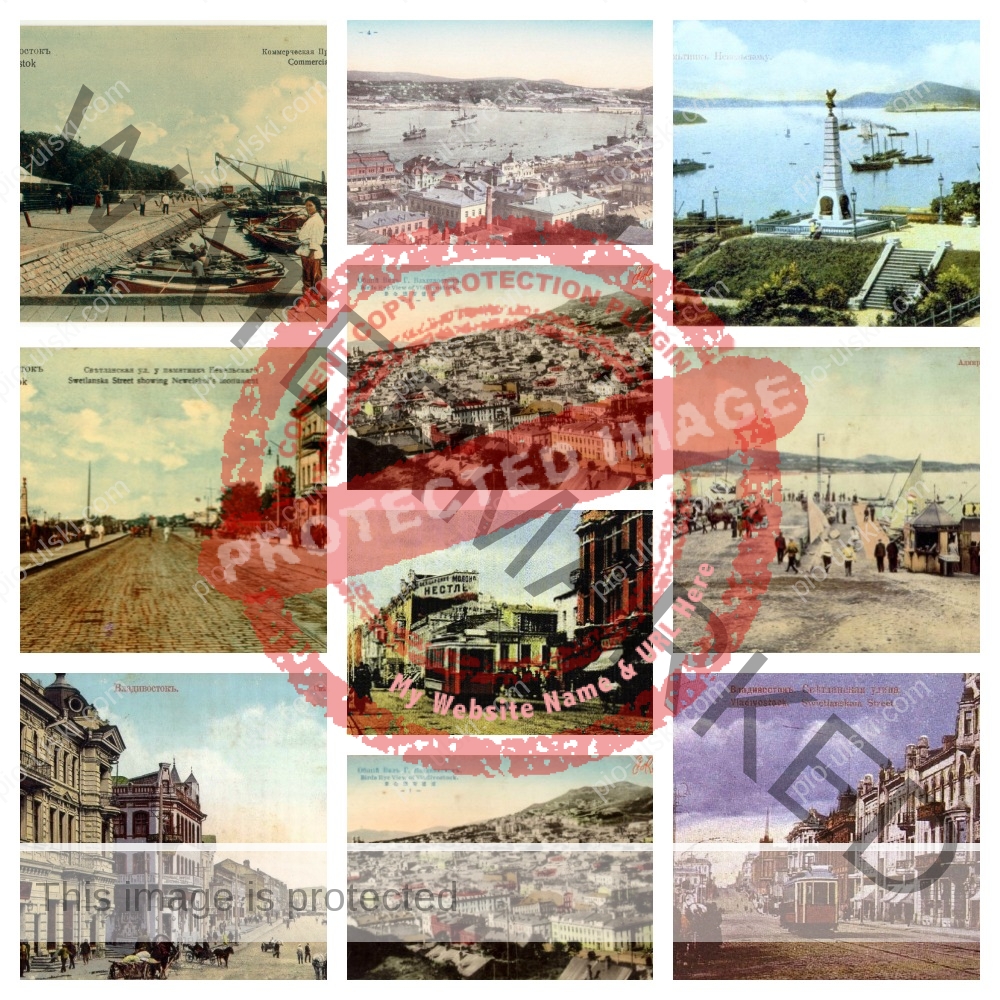
— Information about Old Vladivostok
Article #5. история газета 5 Градостроительные решения
Город тогда только начинал строиться. Неслучайно нынешняя улица Уткинская носила название Последней: именно на ней заканчивались все здания, а дальше располагалось городское кладбище как и положено, за городом.
ЗАБЫТЫЕ СЛОБОДКИ
В былые времена Владивосток полу делился на слободки. Так, на переходе Светланской в 1-ю Портовую, в районе остановки ДВГТУ, был глубокий естественный ров, промытый водой на склоне сопки. Сначала он назывался Машкин овраг по фамилии поручика Машкина, батарея которого стояла на берегу Золотого Рога в этом месте. Затем в 1880-х годах овраг стал называться Клубным по выстроенному здесь в 1885 году клубу Морского собрания. Полностью он был засыпан лишь в 1892 году. Остатки былых оврагов по северному берегу Золотого Рога можно заметить и сегодня в виде небольших скверов вдоль Светланской. А между оврагами, служащими естественными границами, располагались слободки предвестники будущих микрорайонов города. Офицерская слободка, главной улицей которой в 1870-х годах была Афанасьевская, располагалась между Жариковским и Мальцевским оврагами. Огромный Жариковский овраг выходил прямо к берегу Золотого Рога и был назван по фамилии купца и землевладельца Василия Жарикова. Его дом, выстроенный в конце XIX века, хорошо известен всем, кто достаточно долго живет в городе, именно в нем когда-то находилась Приморская краевая библиотека имени М. Горького. Теперь он замаскирован от взглядов окружающих своеобразной занавеской На месте засыпанного Жариковского оврага располагается сквер на остановке «Дальзаводской» (сам овраг продолжается и дальше достаточно пройти вверх по улице Металлистов). Мальцевский овраг находился там, где ныне проходит улица капитана Шефнера (вначале она называлась Японской, затем Авангардной). Его остатки сейчас имеют вид довольно глубокой лощины позади здания Приморского краевого центра народной культуры (раньше он назывался ДК им. В.И. Ленина). Между Мальцевским и Гайдамакским оврагами располагалась Экипажная слободка. Начиная с 1870-х годов, земельные участки для строительства раздавались там матросам Сибирского флотского экипажа, отсюда и название. Главная улица слободки была именована без фантазии тоже Экипажной. Зато другие улицы этого района увековечили имена кораблей, на которых служили матросы; так появились довольно экзотические Абрекская, Тунгусская, Маньчжурская, Японская… В 1901 ГОДУ ВОДУ В ГОРОД ВВОЗИЛИ ПАРОВОЗАМИ ПО ЖЕЛЕЗНОЙ ДОРОГЕ И ВЫДАВАЛИ ЕЕ ПО ОСОБЫМ КНИЖКАМ И ВЕЧНЫЕ ОВРАГИ От очередного, Гайдамакского, оврага начиналась главная улица Матросской слободки Поротовская, названная по фамилии землемера, размечавшего этот район города. Сам овраг носил имя знаменитого клипера «Гайдамак». Матросская слободка тянулась вплоть до Госпитальной пади, или нынешней улицы Луговой (тогда еще не существовавшей).
Кстати, ТАК В 1875 ГОДУ ВЫГЛЯДЕЛА ТИГРОВАЯ СОПКА НАД КИНОТЕАТРОМ «ОКЕАН», СЕЙЧАС ЗАСТРОЕННАЯ ТАУНХАУСАМИ. ФОТО ARSENIEV.ORG здесь сохранилось немало старых домов как деревянных, так и каменных, а также остатки улиц с 1-й до 7-й Матросской. В течение долгого времени это был самый отдаленный район Владивостока, так что Гайдамакский овраг был окончательно засыпан только в 1908 году. А довольно обширные остатки его по традиции получили название Гайдамакского сквера… На другом конце города, в районе Семёновского покоса (Спортивная гавань), порядка было не больше. С крутого обрыва Набережной улицы (она тогда ничем не была огорожена) то и дело кто-то срывался, а на низком берегу Амурского залива прочно обосновались манзы так здесь звали китайцев. В то время городской базар, как ни странно, располагался примерно там же, где и сейчас по выходным. А вот площадь перед современным «Белым домом» полностью насыпная; раньше береговой обрыв проходил прямо по краю Светланской, а дальше был отлогий берег Золотого Рога с базаром. Манзы, естественно, жили там же в своих фанзах, распространяя острые запахи, антисанитарию и болезни. Попытки переселить их в район Семёновского покоса закончились появлением «Миллионки»
БОРЬБА ЗА ЧИСТОТУ
Вопрос о соблюдении санитарии всегда стоял остро для города. Свободно гуляющие свиньи и коровы, бродячие собаки, помои и мусор на улицах, китайские и корейские «гадюшники», грязные базары, нелегальные поселения всё это было реалиями и в XIX, и в XX веках. В 1878 году полицмейстер сообщал управе, что забота о сохранении «чистоты воздуха» отнесена к обязанности полиции и что для уборки города выделено 100 рублей. Но, «приняв во внимание, что манзовское население допускает оставлять нечистоты и павший скот на улицах и площадях», он просил увеличить эту сумму. Кстати, районы в нашем городе впервые появились в 1879 году, когда «для лучшего наблюдения за санитарным состоянием» Владивосток был разбит на 9 частей, а во главе их поставлены наблюдатели. Борьба за чистоту города проходила с переменным успехом. Надо отметить, что дума постоянно была озабочена этими вопросами.
[Source: Приморская газета]Translation by Google
5. Article about history newspaper Town planning decisions
The city was just beginning to be built. It is no coincidence that the current street Utkinskaya was called the Last one: it was where all the buildings ended, and then the city cemetery was located, as it should be, outside the city.
FORGOTTEN SLOBODKI
In the old days, Vladivostok was divided into semi-suburbs. So, at the transition of Svetlanskaya to the 1st Portovaya, in the area of FESTU stop, there was a deep natural ditch, washed with water on the hillside. At first it was called Mashkin ravine by the name of Lieutenant Mashkin, whose battery stood on the bank of the Golden Horn in this place. Then in the 1880s the ravine became known as the Club ravine on the club of the Marine Assembly built here in 1885. Completely it was filled up only in 1892. The remains of the former ravines along the northern shore of the Golden Horn can be seen today in the form of small squares along the Svetlanskaya. And between the ravines, serving natural borders, were located foreclosures precursors of future microdistricts of the city.
Officer’s settlement, the main street of which in the 1870’s was Afanasyevskaya, was located between Zharikovsky and Maltsevsky ravines. The huge Zharikovsky ravine emerged directly to the shore of the Golden Horn and was named after the merchant and landowner Vasily Zharikov. His house, built at the end of the XIX century, well known to all who live long enough in the city, it was once the Primorye Regional Library named after M. Gorky. Now he is disguised from the views surrounding the original curtain. At the place of the covered ravine Zharikovsky is a square at the stop “Dalzavodskaya” (the ravine itself continues and it is enough to pass up the Metallist street). Mal’tsevsky ravine was where the street of Captain Shefner (at the beginning it was called Japanese, then Avant-Garde) passes. His remains now look like a fairly deep hollow behind the building of the Primorsky Regional Center of Folk Culture.
Between the Maltsevsky and Gaydamak ravines was the Crew’s suburb. Beginning in the 1870s, land plots for construction were distributed to the sailors of the Siberian Fleet Crew, hence the name. The main street of the settlement was called without fancy, too, the Crew. But other streets of this area perpetuated the names of the ships on which sailors served; so there were quite exotic Abrekskaya, Tunguska, Manchurian, Japanese … In 1901, the water was imported into the city by steam engines on the railway and extradited it to special books and eternal eagles. From the next, Haydamaksky ravine, the main street of Matrosskaya Slobidka Porotovskaya, named after the surname land surveyor who marked this area of the city. The ravine itself bore the name of the famous clipper “Gaydamak”. The sailor’s settlement stretched right up to the Hospital Padi, or the present Lugovoi Street (which did not yet exist).
By the way, SO IN 1875, TIGER SOPKA LOOKED OVER THE CINEMA “OCEAN”, NOW BECOME BUILT BY TOWNHOUSE. PHOTOS ARSENIEV. ORG here are preserved many old houses, both wooden and stone, as well as the remains of streets from the 1st to the 7th Sailors. For a long time it was the most remote region of Vladivostok, so that the Haydamaksky ravine was finally filled up only in 1908. A fairly extensive remnants of it traditionally received the name of Gaydamak Square … At the other end of the city, in the area of the Semyonovsky mowing (Sports Harbor), there was no more order. From the steep cliffs of the Embankment of the street (it was not fenced at that time), every now and then someone broke away, and on the low bank of the Amur Bay the manzes were firmly established, so here they called the Chinese. At that time, the city bazaar, oddly enough, was located about the same as where it is now on weekends. But the square in front of the modern “White House” is completely in bulk; before the coastal precipice passed right along the edge of Svetlanskaya, and then there was a sloping shore of the Golden Horn with the bazaar. Manzes, of course, lived there in their huts, spreading sharp smells, unsanitary conditions and diseases. Attempts to resettle them in the area of the Semyonovsky mowing resulted in the appearance of the “Million” \
CROWD FOR CLEARANCE
The issue of sanitation was always acute for the city. Freely walking pigs and cows, stray dogs, garbage and garbage in the streets, Chinese and Korean “gadies”, dirty bazaars, illegal settlements all this was realities in the XIX and XX centuries. In 1878, the police chief informed the council that care for maintaining the “clean air” was attributed to the police duty and that 100 rubles were allocated for the cleaning of the city. But, “taking into account that the manzovo population allows to leave uncleanness and fallen cattle in the streets and squares,” he asked to increase this amount. By the way, areas in our city first appeared in 1879, when “for better monitoring of the sanitary condition” Vladivostok was divided into 9 parts, and led by observers. The struggle for the purity of the city was held with varying success. It should be noted that the Duma was constantly concerned about these issues.