
Family Pio-Ulski (Пио-ульский)
Family Pio-Ulski
Things are just a little bit complicated by the use of both Polish and Russian names for my forebears, as well as the spelling of their surname 🙄
To make it as least confusing as possible, I’ve put both their Polish and Russian names, plus the two ways our surname was spelled.
My father’s great-great grandfather was Alexander Pio-Ulski/Pioulski, who was a noble landowner. His great grandfather was Jerzy/Egor, who was a judge and landowner, and his grandfather was Wladyslaw/Vladyslav Egorovich (who was a mathematics teacher and secondary school inspector, as well as being a Court Counselor). He married Sabina Bronislawa Biestrzykowska, who came from a noble family in western Poland.
Sabina’s parents were Teodor Biestrzykowski from Biestrzyków, whose family carried the Prus (I – Turzyna) and Marianna Rozalia Masłowska from Masłowice, whose family carried the Samson crest.
The Pio-Ulski/Pioulski family was a branch of the Jan Ulski family which was located in northeastern Belarus, especially in the Polotsk, Witebsk/Vitebsk, Mogilev triangle, and which originated from at least the early 17th century.
According to Konstantin Pio-Ulsky, way back when the family name used to be plain old Ulski but in 1609, Jan Ulski went into service for Tsar Vasily Shumsky (aka Vasily Ivanovich IV/Basil Shuisky). The prefix “Pio” (Latin meaning pious) was added to our ancestors’ surname by Pope Paul V (a Borghese no less!!) during his visit to Poland to visit King Sigismund III after an Ulski saved Sigismund’s daughter!
Several of the Pio-Ulskis/Pioulskis participated in the elections of various Polish kings during the 17th & 18th centuries.
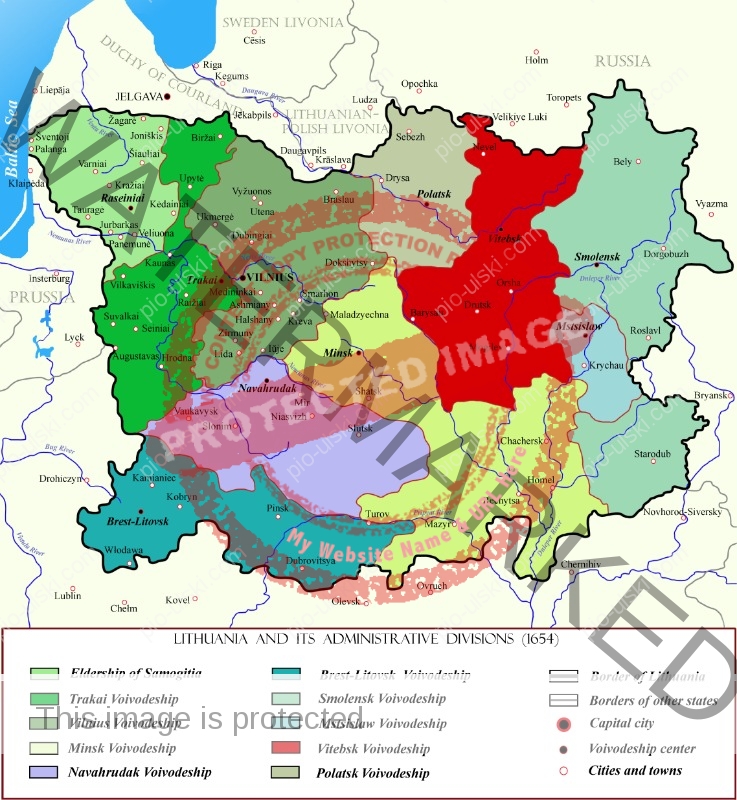
During these times, the Polish-Lithuanian Commonwealth was one of Europe’s largest states, comprising the territory of today’s Poland, parts of Czechia, Lithuania, Latvia, Estonia, Belarus, Ukraine and Russia. The Commonwealth (the so-called Rzeczpospolita) was ruled by kings who were elected by the nobles of all provinces. This state was remarkable in that a relatively large proportion of the population of its land were noble (6-10% of the total population) and that there was a “noble culture” which officially held that a poor noble had the same political rights as a rich magnate.
The Pio-Ulskis/Pioulskis lived in the Grand Duchy of Lithuania, part of the Rzeczpospolita , which was at the forefront of many wars with, which was at the forefront of many wars with Muscovy. As such their lands experienced much war.
Towards the end of the 18th century the Polish-Lithuanian Rzeczpospolita was attacked simultaneously by the Russians, Prussians and Austrians and divided up amongst themselves. After the “partitions of Poland” the occupying powers needed to do something with the large group of Polish-Lithuanian nobles that they had inherited with their booty. In each partition a slightly different approach was taken.
The aim of the Russian Central government was to significantly reduce the number of Polish nobles in their territory for two main reasons: firstly because numerically the Polish nobles outnumbered the Russian nobles in the Russian Empire significantly; secondly because the independent ethos of the Polish noblemen was a constant threat to the absolutist ethos of Tsarist Russia. Therefore it was decided that all Polish noble had to “prove” their nobility.
In practice, only the higher nobility and some pro-Russian Polish nobles were officially confirmed – the rest condemned to fade away as declassed nobles, treated as peasants or city dwellers.
You can see the Pio-Ulski/Pioulski Family Tree HERE.
A document found in the National Historical Archives of Belarus, the fund 2512 – Vitebsk Noble deputy meetings archive regarding the nobility of my line of Pio-Ulskis …
1841.07.21 в витебском дворянском депутатском собрании (ВДДС) рассматривали дело о роде Пиоульских, утверждённых указом Герольдии №12207 от 1836.12.29 который по определению ВДДС от 1832.11.5 признал род Пиоульских в дворянском достоинстве. По объявлении о таковом решении Герольдии роду Пиоульских Могилёвской губернии Оршанского уезда, помещик попечитель сельских запасных магазинов Егорь Александров сын Пиоульский представил при прошении своём, что доказательств на прочих лиц рода он не представляет поскольку их не имеет и на родившихся от него детей Владислава и дочь Марьяну по неполученным метрик. Представляет же документы:
1) 1738.12.8 купчая по которой помещик Яков Пац-Помарнацкий имение Рамшино(*) в витебском воеводстве продал дворянам Луке и Михаилу сыновям Захарьевым Пиоульским за 5600 злотых.
2) 1761.12.24 уступки 1760.10.5 данная по коей дворянин Лука Пиоульский с сыновьями Матвеем и Иосифом принадлежавшую ему часть Рамшино с крестьянами в витебском воеводстве уступил брату Михаилу с сыновьями его Доминику, Антону и Ивану за 6000 злотых.
3) 1769.11.2 в витебском уездном суде представлена купчаяь по которой дворяне Дементий, Антон и Иван и сыновья Дементия – Александр и Казимир Пиоульские имение Рамшино продали дворянам Игнатию и Александру Пацъ-Помарнацким за 3000 злотых.
4) духовное завещание 1823.11.8 представленное в полотском земском суде 1825.03.5 по которому Смоленский Скарбник Александр Пиоульский записал старшему сыну Антону капиталь и движимое имущество, среднему сыну Игнатию – сумму обозначеную на закладном фольварке Муравце в полотстком уезде, а младшему Егору ничего, т.к. “израсходовал довольно на воспитание его”.
5) метрики о крещении 1824.08.5 Клавдийя сына благородных Антона и Варвары урожденной Будзько Пиоульских.
6) по ревизии 1811 полотского уезда за помещиком Игнатием Александровым Пиоульским в фольварке Фирковщизне доставшееся по наследству от дяди его Казимира Пиоульского состояло дворовых 3 мужика; по ревизии 1816 помещиками Игнатием и Юрием Александровыми Пиоульскими с вновь приобретенными в сельце Никановъ – 13 душ мужского пола; по ревизии по полотскому уезду за малолетними Флорианом и Геронимом Игнатьевыми Пиоульскими в сельце (**) Никановъ состоит в окладе 13 душ мужского пола.
7) свидетельства оршанского уездного предводителя дворянства 1833.07.29 данная Георгию Александрову Пиоульскому в том, что по дворянским спискам 1832 состоит в 1-м разряде с семейством своим – женою Катериною Григорьевою сыновьями Францом 12 лет, Николаем 8, Михаилом 1, дочерьми Елисаветою 10 и Анною 4, родными племянниками Флорентином и Геронимом Игнатьевыми Пиоульскими и что по спискам видно, что фамилия их по
8) формулярный список письмоводителя канцелярии лепельского уезда предводителя дворянства Флорентина Игнатьева имеет в полотском уезде неразделённое с братьями имение Никоново определен в штат 1837.09.14 в штрафах и под судом не был.1841.07.21 At the Vitebsk Nobility Deputies meeting (VDDC) the matters concerning the Pio-Ulski/Pioulski family were discussed and affirmed by Heraldic order No: 12207 from date of 1836.12.29, which by the decision of the VDDC from 1832.11.5 recognized that the Pio-Ulski/Pioulski family was of nobility rank. According to the announcement of this heraldic decision for the Pio-Ulski/Pioulski family in the Mogilev district of the Oshansky region, the landowner trustee of the rural storehouse markets, Egor Alexandrovich, a Pio-Ulski/Pioulski son, presented on his own cognizance that he does not present any documentary proof for any other persons of the family, as he has no others, nor does he have it for his born children, Vladislav and Mariana according to any metrics (accounts) not received. He presents the following documents:
1) Bill of sale- according to which Jacob Pats-Pomerantsev sold the estate of Ramshino(*) in the Vitebsk holding to the nobles Luke and Michael – the sons of Zakharov Pio-Ulski/Pioulski for the sum of 5,600 złotys.
2) 1761.12.14 (date) seconding the date of 1760.10.5 given according to which Luka Pio-Ulski/Pioulski, nobleman with sons Matthew and Joseph, ceded his owned portion of the Ramshino estate with serfs in the Vitebsk district to his brother Mikhail and his sons Dominic, Anthony and Ivan for 6000 złoty.
3) 1769.11.2 A bill of sale, presented to the local court of the Vitebsk district according to which Noblemen Dementii, Anton and Ivan and the sons of Dementii— Alexander and Kazimir Pio-Ulski/Pioulski sold the Ramshino estate to Noblemen Ignatius and Alexander Pats-Pomerantz for 3000 złotys.
4) Testament and will (dated 1823.11.8) presented in the Polotsk district court 1825.03.5 according to which the Smolensk squire Alexander Pio-Ulski/Pioulski registered to his eldest son Anthony the capital and to his second son, Ignatius the movable property i.e, sum indicated in the enclosed mortgage of Muromtse property in the Polotsk district, but nothing to his youngest son Egor, as “enough was spent on his education”.
5) Accounts of the baptism 1824.08.5 of Claudius, son of the honourables Antony and Barbara (born as Budzko Pio-Ulski/Pioulski).
6) According to the revision of 1811 in the Polotsk district for the landowner Ignatius Alexandrovich in the mortgage for Firkovshintz received as an inheritance from his uncle Kazimir Pio-Ulski/Pioulski consisting of three mouzhiks (men); by the revision of 1816 to the landowners Ignatius and Julian Alexandrovich anew were acquired in the village of Nikanovo (**) – 13 souls of the male sex; by the 1834 revisión in the Polotsk district for the minors Florian and Heronymous Ignatiev Pio-Ulski/Pioulski, consisting in trust of 13 souls of the male sex and that by the listing it is evident that their surnames were as indicated.
7) Witness document from the Orshansk local nobility official of 1833.07.29 given to Georgiy Aleksandrovich Pio-Ulski/Pioulski that according to nobility records of 1832 that, in the first nobles category, his family are listed as – wife Katerina Grigorieva with sons Frantz- age 12, Nikolai – 8, Mikhail – 1, daughters Elizabeth -10 and Anna – 4, nephews Florentine and Heronymous Ignatiev Pio-Ulski/Pioulski and that by register it is evident, their surnames are as indicated.
8) Formulary listing of the documents clerk of the chancellery of Lepelsk district, that the nobility weyrleader Florentine Ignatiev owns an undivided estate with his brothers in the Polotsk district —Nikonovo- entered into force 1837.09.14, the parcels intact and not under judgement.
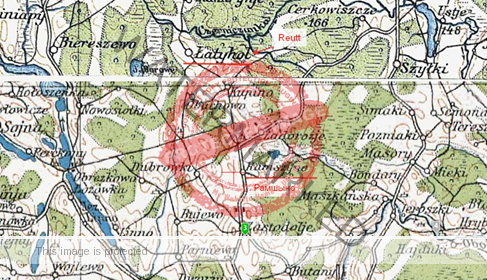
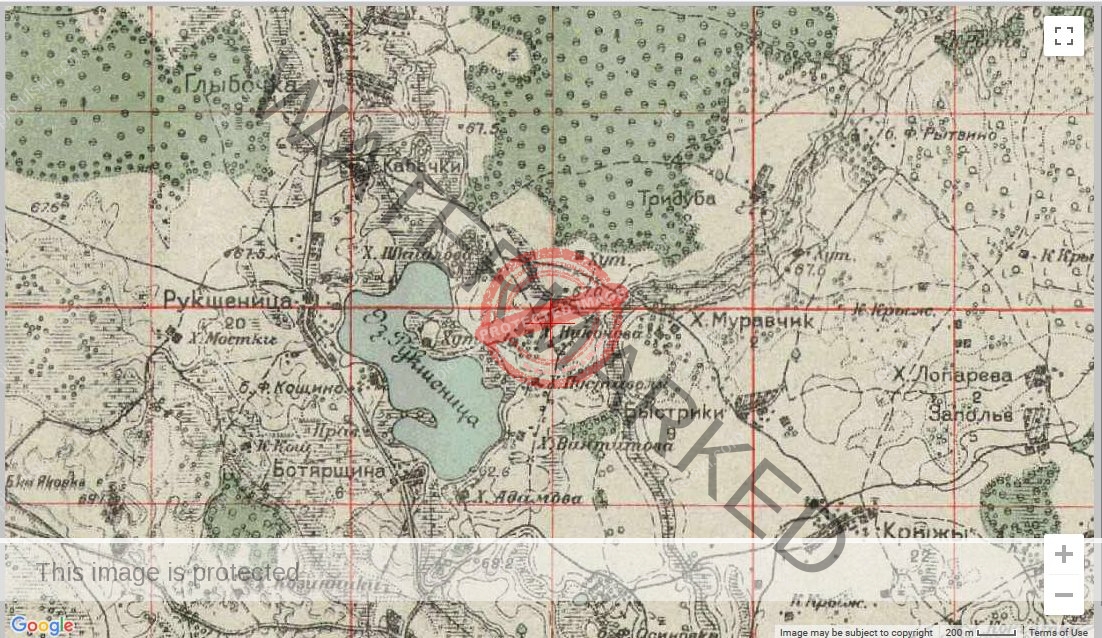
[translation courtesy Natalia Kissleff](*) An old map of Ramshino [courtesy Viktoria Pilnik]
(**) Old map showing Никонов / Nikanovo [courtesy Viktoria Pilnik]

I have been blessed by meeting some really wonderful people via my site and who are now members of my FB group!
I had so much help from Viktoria Pilnik and now Iwona Osmolska, who came across my site when she was researching her own ancestors, found documents about the Pio-Ulskis when she was investigating her own family background!
Their kindness truly overwhelmed me and made my ancestors come to life almost! Those young ladies restored my faith in humans!
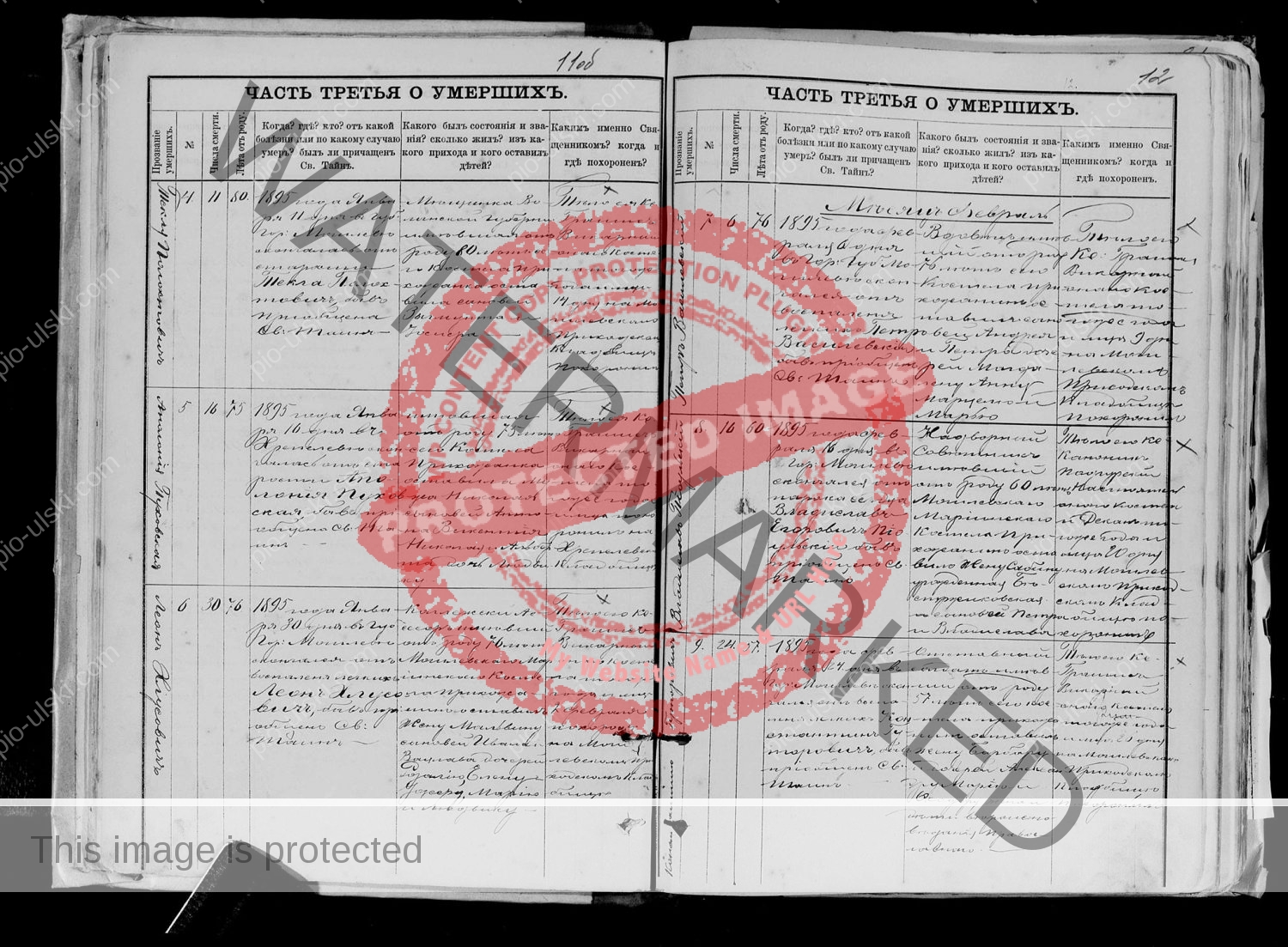
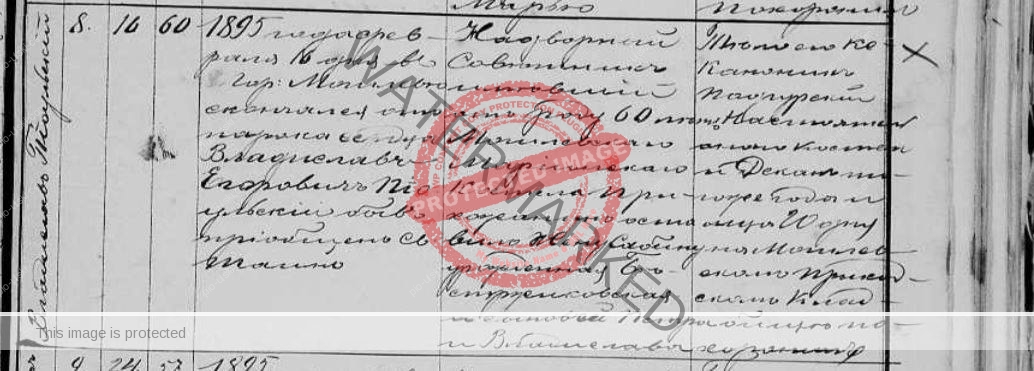
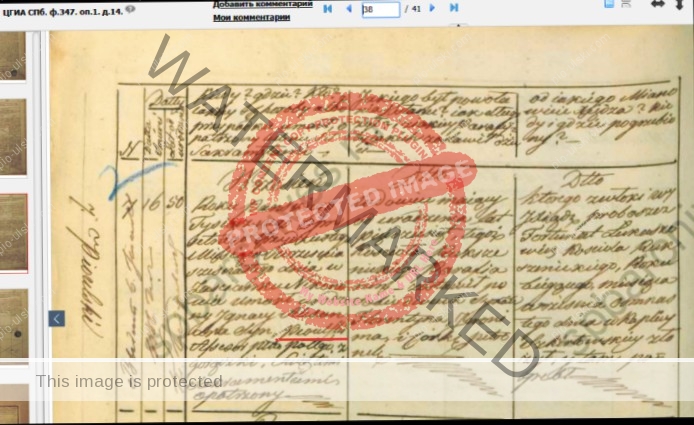
Death certificate of Vladyslav Egorovich Pioulski (Wladyslaw’s father, my great grandfather) who died on Feb 16, 1895, in Mogilev. He was 60 years old. His occupation was described as court counselor in the city of Mogilev. It’s the death certificate number 8 from year 1895.
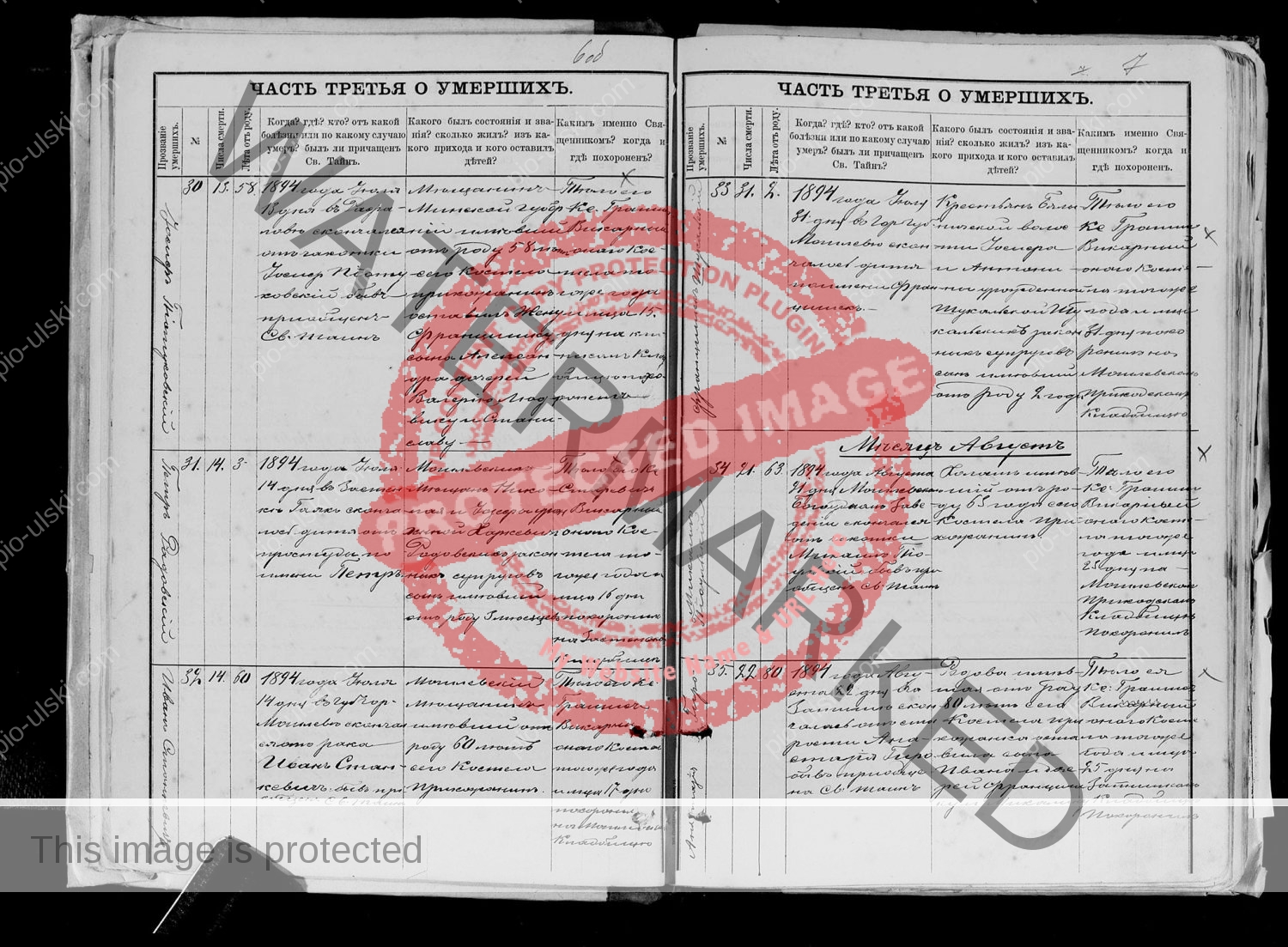
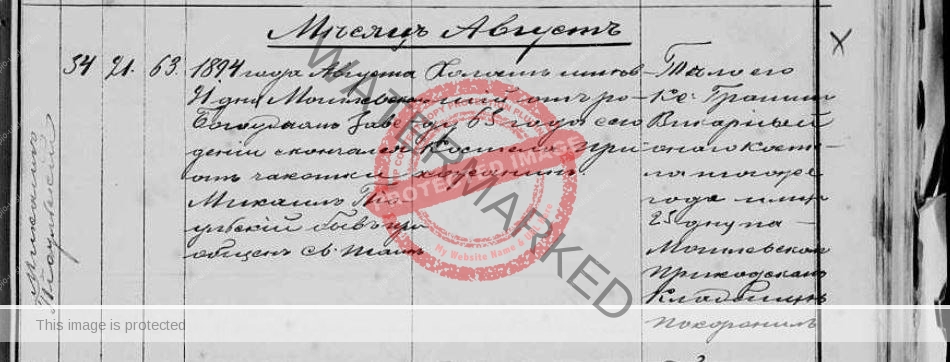
2) Death certificate of Michal (Michael) Pioulski who died on August 21, 1894. It’s the document nr 34. He was 63. He was buried on Aug 25, 1894 in Mogilev in a local cemetery.
Michal was my great grandfather’s brother.
Click to enlarge
Click to enlarge
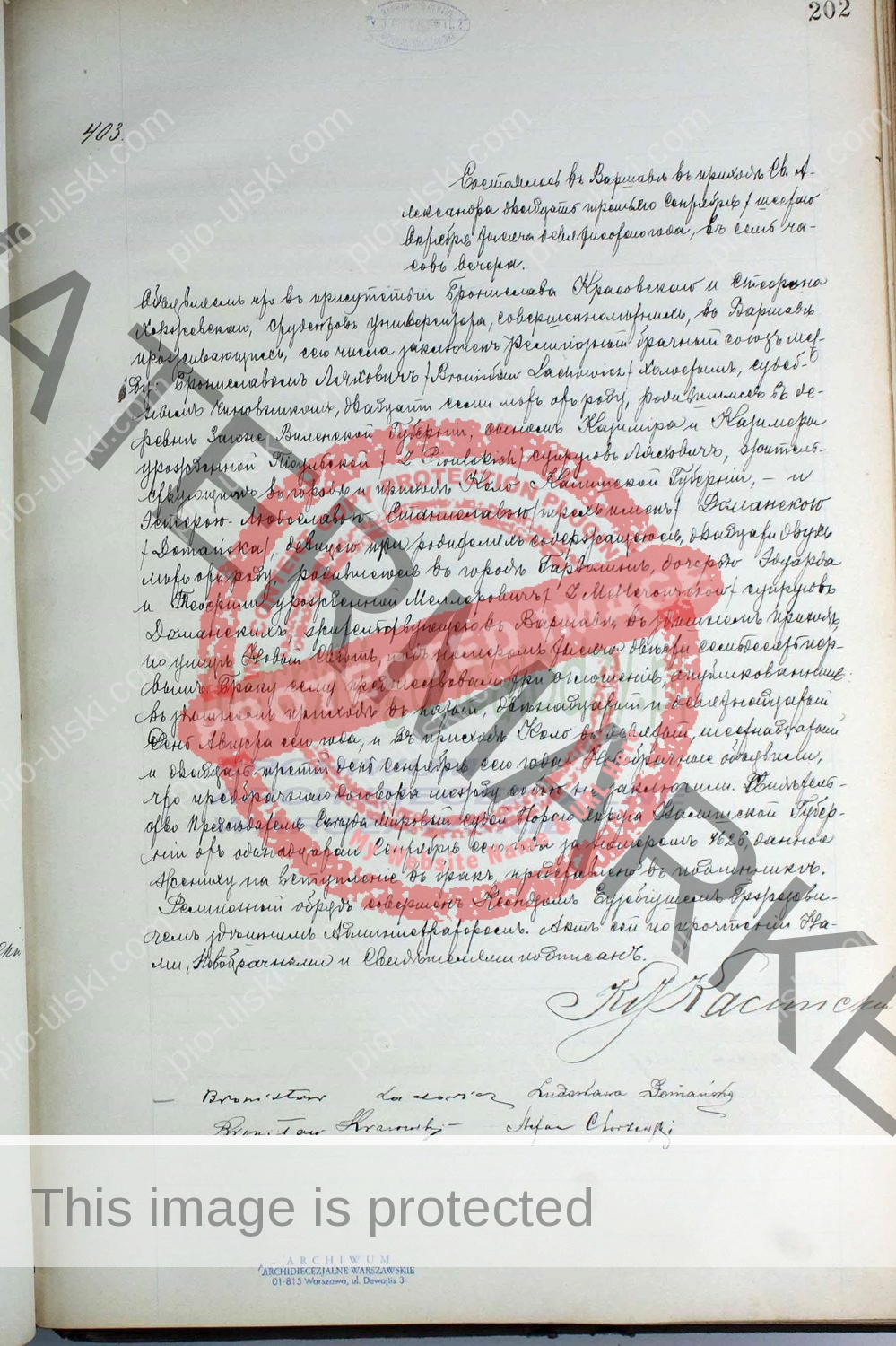
3.) Marriage certificate from a Roman Catholic church of St Aleksander in Warsaw, Poland, (the same church where my family members were married and baptized!!!) for Bronisław Lachowicz and Estera Ludwika Stanisława Domańska. Bronisław (Bronislav) was a son of Kazimierz (Casimir) and Kazimiera (Casimira) Pioulska.
He married Estera Ludwika Stanisława Domańska (Estera Ludvika Stanislava Domanska), daughter of Edward and Teofila Mellerowicz (Mellerovich). They were married on October 6, 1900 at the Roman Catholic Church of Saint Aleksander in Warsaw, Poland. The document number is 403/1900 year.
Her son Bronislav was born in a village Zagon (?) in the Vilnius Governorate (present Lithuania). He was 27 and his bride was 22.
Click to enlarge
Now initially I was wrong in thinking that the Pio-Ulskis from Vitebsk were a different branch to those of Mogilev. They were from Vitebsk Province/Voivodeship, and were, in fact, my ancestors!
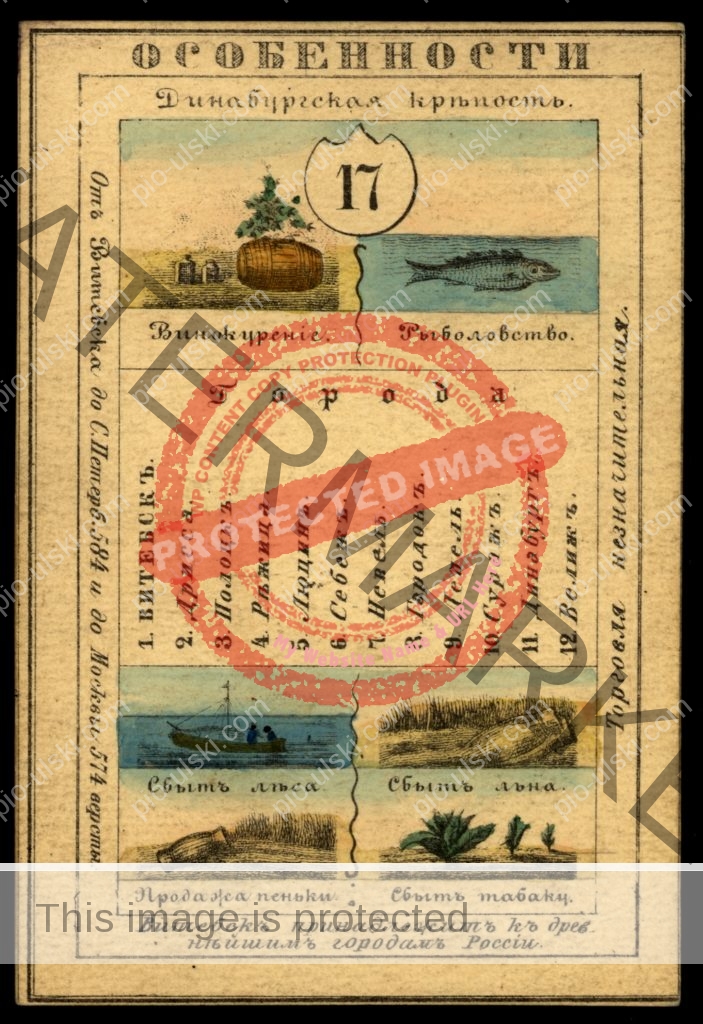
Vitebsk Province, Russian empire, 1856 – Российская национальная библиотека
This card is one of a souvenir set of 82 illustrated cards–one for each province of the Russian Empire as it existed in 1856. Each card presents an overview of a particular province’s culture, history, economy, and geography. The front of the card depicts such distinguishing features as rivers, mountains, major cities, and chief industries. The back of each card contains a map of the province, the provincial seal, information about the population, and a picture of the local costume of the inhabitants.
Витебская губерния Это открытка из сувенирного набора, состоящего из 82 иллюстрированных открыток, по одной на каждую провинцию Российской Империи в том виде, как она существовала в 1856 году. На каждой открытке представлен обзор культуры, истории, экономики и географии провинции. На лицевой стороне открытки описаны главные отличительные особенности провинции: реки, горы, крупные города и ключевые отрасли промышленности. На оборотной стороне каждой открытки изображены карта и печать провинции, приводится информация о населении, а также изображена традиционная одежда местных жителей. 1856
Список дворянских родов, внесённых в Родословную книгу Дворянского Депутатского собрания Витебской губернии.
Источник
ППавловичи (1.1849; 6.1826),
Павловские, Падеревский (6.1832),
Палские, Пальчевский (6.1832),
Панько-Максимович (6.1837),
Папкевич (1.1857),
Парадня (6.1902),
Парак (1.1833),
Парравичини (Паравичины)(1.1891),
Парфеновы (2.1840),
Патрицы, Паулин фон Розеншильд (6.1822),
Паховские, Пац-Помарнацкий (1.1851),
Пашкевичи (1.1874),
Пвелинские, Пеньковские (1.1865*),
Пержхало-Дакигиевич (1.1840),
Петкевичи, Петрашевские (6.1859),
Петрашкевичи, Петриковские, Петровские, Пигулевские (3.1901),
Пилецкий (1.1852),
Пиоро, Пиотровичи, Пиотровские (1.1842; 2.1873),
Пиоттух-Кублицкий (1.1859),
Пиоульские, Писарев, Пиховские, Плесневич (1.1856)
|
Graduated from the Vitebsk grammar school 1843 |
Окончившие курс Витебской гимназии 1843 г. |
the middle class -.? GVilno vypusk.gimnazii (1843)
Пиоульский Петр (1843) мещан.?-г.Вильно выпуск.гимназии (1843)
The above screenshot is of the Address-calendar of 1865. Ranks of the Civil and Military departments, as well as the clergy. Page 74 …
Ministry of Justice Lepel’s Noble guardianship. The clerk: Pioulski Florentin Ignatiev, Catholic, studied at the Vitebsk gymnasium, 44 years old, work 27 years.
I had another message from Viktoria giving me more information about the Pioulskis which she found in the death records of Rukšanicy church, Vitebsk, in Belarus …
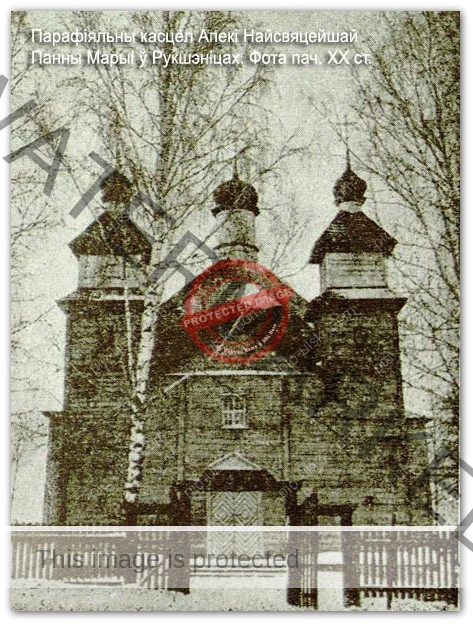
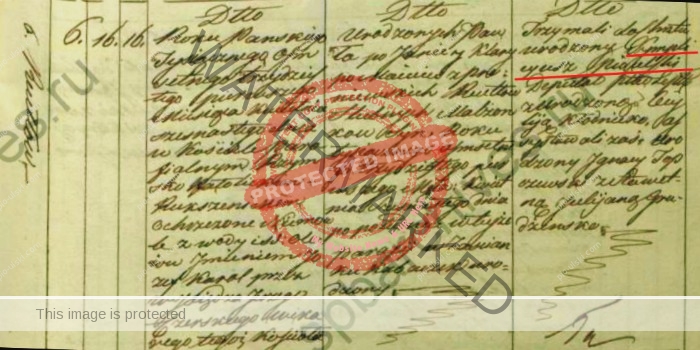
“This record mentions: “1830.06.16, Ignati Pioulski, the son of Alexander, 50 years old, Assessor of the Polotsk district, died of fever. He left his sons Florentin and Jerome, his daughter, Petronel”
Rukšanicy church record (Click to enlarge)
It turns out that Ignatius Alexandrov (Ignati Alexandrovich) was born in about 1780, and Florentin (Florentin Ignatovich) in about 1821.
Below is a scan of the records of the Rukshenitsa church (Vitebsk province) 1831.04.16 showing Ximplyciusz Pioulski (наверное имя, Симплиций / Simplicius), a deputy of the Lepel district, was the godfather of Joseph-Karl Reutt.
Record from Rukshenitsa church (Click to enlarge)
There is a book from 1909 which lists the noble families in Belarus and the Pioulski name is there 🤗

The translation of the title of the book is «Alphabetical list of noble families made in noble bloodlines books Mogilev province» and the Pioulskis appear on Page 11 …
page. 11
Malinowski, Mankovsky, Marcinkiewicz, Mackiewicz, Meyer, Merkushev Melnikov, Monnerot Du Maine, Merlin, Flashes Mikosha, Miropolskaya, Michalowski, Madestov, Portyanko-Mońki, Moskovenko, rake Murashko Neyshventer, Nicotine, Nichiporenko, Novitsky Nosovichi, Ozmidov, Olechowski, Olszewski, Ostrovsky, wit, Okhochinsky, Pazdeev, Panchenko, Poprotsky, Pashinsky, Pelrashkevich, Penquin, Peters, Pyatkevich Petrash, Pechkovskii, Pioulski, Plohotski, Podashevski, Pokrovsky, Polomian, Poltoratsk, Poslavskaya, Przheradovski, Prigorovsky, Pukhovsky, Radkevych, Radchenko, Rachmaninoff, Rego, Renteln, Bronyushets-Retsky, Retsky, Rodkevich, Roland Romankevich Romushkevich, Sommerset-Rosseter,
****
The Pioulski name was also mentioned in the Kasper Niesiecki, Polish Heraldry list …

More Information About The Pio-Ulski Family …
 Wladyslaw Egor Pio-Ulski – Nadvórnyy sovétnik
Piotr-Antonii Pio-Ulski ~ 1876-unknown
An interesting article which (I think) refers to the time of the Polish-Lithuanian Commonwealth but you need Chrome (certainly in 2016) to get the Russian translated
АКТУАЛЬНО АРХИВ ВИДЕО МЕДАЛИ НИКОЛАЕВСКОЙ ЭПОХИ: ОТ ПОЛЬСКОГО ВОССТАНИЯ ДО КРЫМСКОЙ ВОЙНЫ (Medals Mykolaiv Epochs: From the Polish Uprising before the Crimean War) by Maxim Lavrentyev
(Since in the years 1814-1815 the decision of the Congress of Vienna was created by the so-called Polish kingdom – the kingdom, being in union with Russia, the Russian government, dismissing from the urgent needs of its own people, it has tried every possible way to placate the Poles, as though they had just emerged victorious of the Napoleonic wars. This enemy of autocracy, orthodoxy and nationalism Alexander I gave the Constitution, which has not received Russia, left the parliament (Sejm) and even its own army of legionaries who took part in the housing Poniatowski ranks the most active part in the invasion of “motley array of languages.”
[wp_objects_pdf]
Pio-Ulski.com claims no credit for any images posted on the site, unless explicitly stated.
All copyright goes to their respective owners.
i have a photo for Lew Pio-Ulski; hi was 78-80 years. Hi has not child. hi leave with us.