
Other Pio-Ulskis Found Online
Pio-Ulskis from Poland
I have a suspicion that Andrzej was the son of my grandfather, Wladyslaw, when he went to Poland after being with the White Fleet in Arkhangelsk!
My sister told me she heard that Wladyslaw married there so Andrzej could possibly be my father’s stepbrother ?
Sent to Auschwitz, no. camps 9571 – 10163, on 28/4/41
Found on the Auschwitz Holocaust page :
Pio-Ulski, Andrzej
Birth Date : 1922-11-10
Place of Birth : Grodziec
Date of Arrest : 28/4/41
Place of Arrest : Warsaw Gestapo prison then Auschwitz
Auschwitz Number : 10059
Profession : Schoolboy

****
And this from a forum about The Sebezh Catholics! (Sebezh is a city (since 1772) in the southwest of the Pskov region)
«С поправками из личного дела священника: 8.01.1886 г. крещен в имении Заболотье свящ. Сливовским, настоятелем Лепельского прихода, сын прусских подданных – Готлиба и Сусанны из Пиоульских Филиппов, законных супругов. Родился 05.01.1886 г. (не 1885!).»
“The son of Prussian nationals, Gottlieb and Susanna from Pioulski Filippov, a legitimate spouse, was born on January 5, 1886 (not 1885!) Later, he left Prussian citizenship and accepted the Russian. By nationality, it is not known who he thought he was: the father of a Prussian German, mother of Prussian Poles.”
****
Pio-Ulskis in Yugoslavia – now Serbia
From SV Volkoff about officers in the Imperial Forces before and during the Revolution…
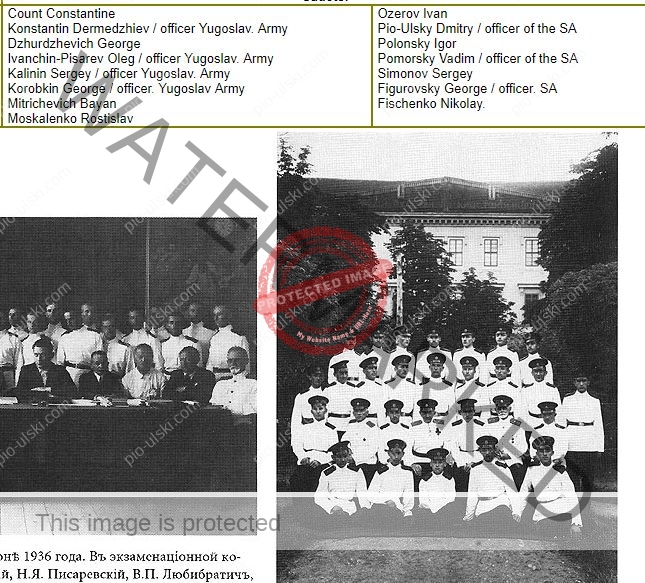
Dmitry Pio-Ulsky
Пио-Ульский Дмитрий. В эмиграции в Югославии. Окончил Первый русский кадетский корпус 1936, Югославская военная академия 1939 (пехота). /208/
{Pio-Ulsky Dmitry. In exile in Yugoslavia. He graduated from the First Russian Cadet Corps in 1936, the Yugoslav military academy of 1939 (infantry). / 208 /}
Dmitri Pio-Ulsky Belgrade
****
Pio-Ulskis from Pskov
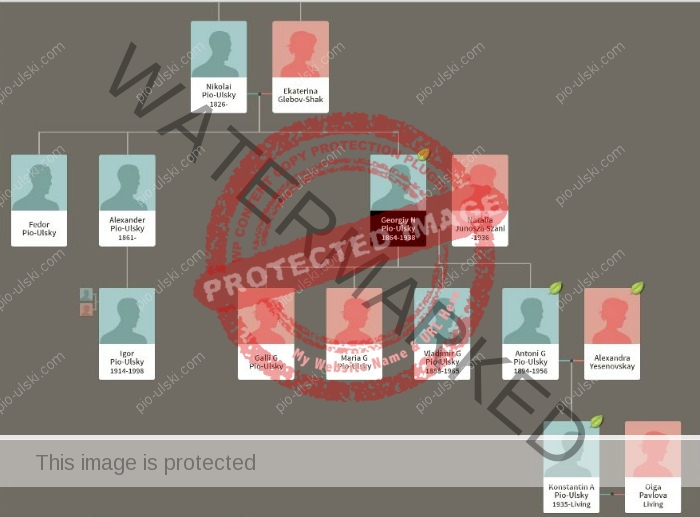
Pskov Pio-Ulskys Family Tree
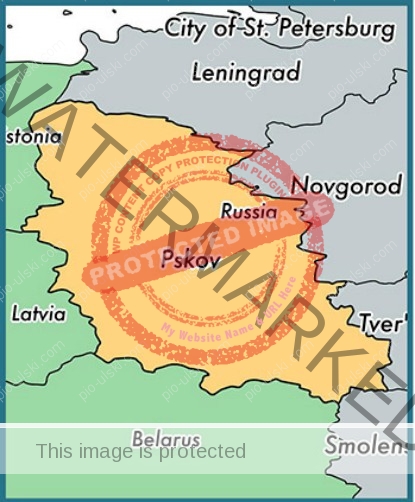
The map shows where Pskov is
Vladimir Pio-Ulsky (1854)
g.Pskov vypusk.gimnazii (1854)
Пиоульский Владимир (1854) -г.Псков выпуск.гимназии (1854)
****
PIO-ULSKY
/ /
[.. – ..]
Pio-Ulsky – Polish noble family,
officer of the 15th Turkestan str. battalion
By the highest order of 05/09/1902 transferred to the 1st Nevsky infantry. regiment
Bio permanent address – https://centrasia.org/person.php?st=1600714963
****
Alexander Pio-Ulski (1861) (Wladyslaw’s cousin)
- Pio-Ulsky Alexander Nikolaevich – military official, state councilor, 35th Army
- Пио-Ульский Александр Николаевич – военный чиновник, статский советник, 35-й армейский корпус
****
Fedor Pioulsky (1879) (Wladyslaw’s cousin)
Graduate cadet in 1879 Mikhailovsky military academy
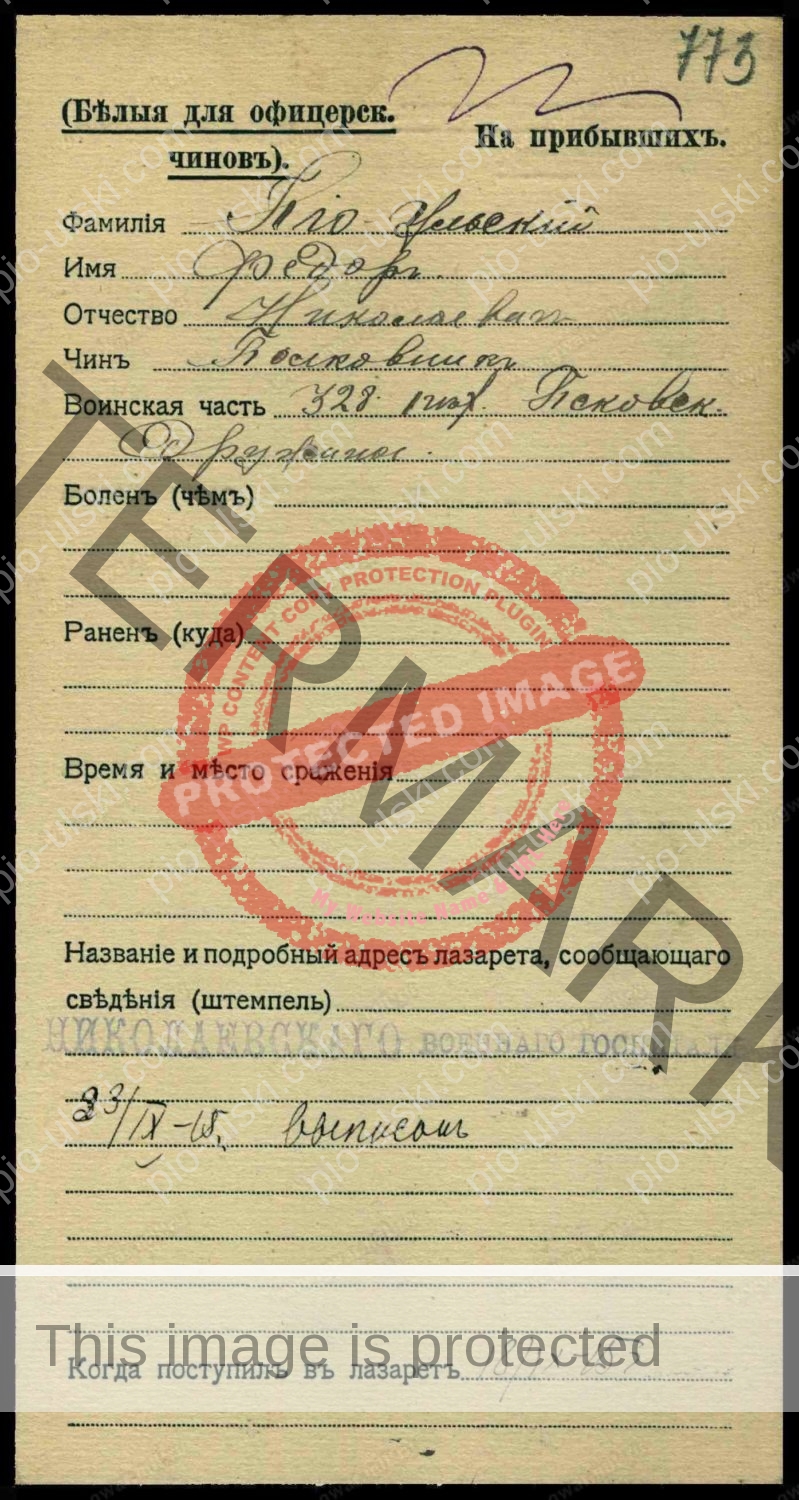
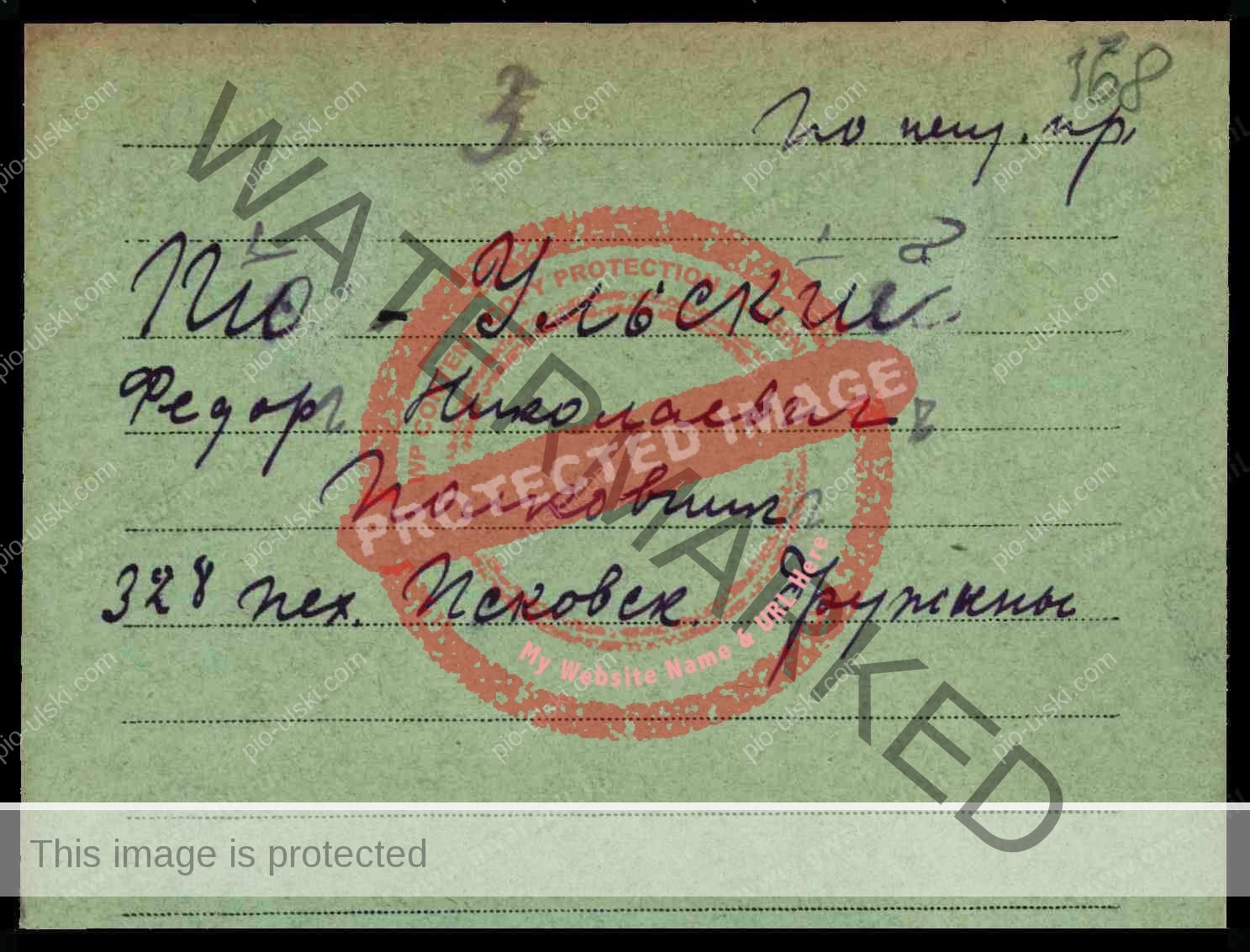
Пиоульский Федор (1879) выпускник юнкером в 1879 Михайловского военного уч-щаPlaced in the 10th combined hospital of the military department, Yauzsky boulevard, Serebryanichesky lane, Pankratova village:.. Pio Ulsky Fedor. (For information about the dead and wounded in the PMA officers according to the newspaper “Russian word”, July 1915)
Помещены в 10-й сводный госпиталь военнаго ведомства, Яузский бульвар, Серебрянический пер., д. Панкратова : Пио-Ульский Федор Николаевич (Сведения об убитых и раненых в ПМВ офицерах по данным газеты «Русское слово», июль 1915г)
Должность/Звание полковник
Воинская часть 328 пех. Псковск. дружина
Причина выбытия не уточнено
Дата события 18.09.1915
Тип документа Карточка на прибывших (высшие чины)
Архив Российский Государственный Военно-исторический архив
Фонд Картотека бюро учета потерь в Первой мировой войне (офицеров и солдат)
Шкаф без номера
Ящик 7391-ПPosition/Rank colonel
Military unit 328 infantry Pskov. retinue
Reason for leaving not specified
Event date 09/18/1915
Document type Card for arrivals (higher ranks)
Archive Russian State Military Historical Archive
Fund Card file of the bureau of accounting for losses in the First World War (officers and soldiers)
Closet without a number
Box 7391-PCard for arrivals (higher ranks) (Click to enlarge) Card for arrivals (higher ranks) Chelovek Hospital (Click to enlarge)
The case of divorce. Pio Ulsky Fedor. Pio Ulskaya (Pioulskaya) (nee. Vologdina) K. Love. (Archives of St Petersburg)
ЦГИА СПб. Фонд 678. Опись 1. Дело 230
Дело о расторжении брака. Пио-Ульский Федор Николаевич. Пио-Ульская (Пиоульская) (урожд. Вологдина) Любовь Константиновна (Архивы Санкт-Петербурга)
I was hugely surprised to get a note on another Russian site where I left the surname Pio-Ulski to get a note from an Olga Osipova whose great grandfather was Fyedor (Fedor) Nikolavevich Pio-Ulski and she was wondering if I had any information on him.
I gave her all the information I managed to find about him and then she sent me more information about his life under the Bolsheviks/Soviets :
So, some facts about Fyodor Nikolayevich’s life in Russia. Unfortunately, I do not know his date of birth, I think it was about 1849.
Because in 1908 about (still no documents), he married a second wife to Apaleva Olga Petrovna (noble birth). She was about 40 years old and he was about 60 when they had a daughter, my grandmother Apaleva (Kurovtseva) Nina Fedorovna (February 19, 1909 – July 15, 1994). I never saw my grandmother, she was repressed, then rehabilitated. But the fate of the family was such that I did not know her. But I fortunately have “Memories” written by her. I hope I can publish them. There’s a little bit in there about Father Fyodor, too. Nina was an only daughter and was loved and spoiled. Fedor was very well educated, loved books, treated people well, without arrogance. They consciously chose to stay in Russia.In 1919-1920 they lived in Sarapul on the Kama River. Fyodor works for a while in a military factory.
Next, for reasons unknown to me, my grandmother’s parents divorce. She and her mother returned to St. Petersburg, and he left for Stavropol, Kavkazsky. As I understand it, there was a terrible famine there at the time. My grandmother wrote that my father died there in 1921 of typhus.Such a sad story.
Yes! There are so very many stories about families during the Revolution, Civil War and under Bolshevik/Soviet rule that are sad, especially if some of the people were originally from well-to-do/noble families. Look what happened to my great-grandfather after he and his family were swept up by the Bolsheviks! 🤦♀️
****
Nikolai Nikolayevich Pio-ulsky (1878) (Wladyslaw’s cousin)
Ensign : The 145 infantry Novocherkassk Emperor Alexander III of the regiment
Пио-Ульский N (1919) в 1919 Ротмистр. В белых войсках Восточного фронта, летом 1919 преподаватель Владивостокской учебно-инструкторской школы [Волков С.В. Офицеры арм.кав. М.,2002] Pio-Ulsky N (1919) in 1919 Captain. In the white troops of the Eastern Front, in the summer of 1919, a teacher at the Vladivostok training and instructor school [Volkov S. V. Officers of the Army Department, Moscow, 2002]
****
Georgiy Nikolaevich Pio-Ulsky (1864-1938) (Wladyslaw’s cousin)
From SV Volkoff about officers in the Imperial Forces before and during the Revolution…
Пио-Ульский Георгий Николаевич*, р. 24 янв. 1864 в Пскове. Кронштадтское техническое училище 1881, Морское инженерное училище 1884, Морская академия. Генерал-майор, инженер-механик флота, профессор. В Вооруженных силах Юга России. Генерал-лейтенант. К лету 1921 в Югославии. В эмиграции в Белграде, 1921–1923 член Союза русских инженеров. Профессор Белградского университета. Ум. 13 авг. 1938 в Белграде. Жена Наталья Антоновна
(ур. Юноша-Шаняв{Pio-Ulsky Georgiy Nikolaevich *, p. Jan. 24 1864 in Pskov. Kronstadt Technical School 1881, Marine Engineering School 1884, Maritime Academy. Major-General, engineer-mechanic of the fleet, professor. In the Armed forces of the South of Russia. Lieutenant General. By the summer of 1921 in Yugoslavia. In exile in Belgrade, 1921-1923 a member of the Union Russian engineers. Professor of the Belgrade University. Mind. Aug. 13 1938 in Belgrade. Wife Natalia Antonovna (the Yunosha-Shanyavskaya lvl, died on December 28, 1936 in the same place). / 59; 60; 75; 95; 107; 430; 449-1; 450; 581; 677 /}
****
Vladimir Georgievich Pio-Ulsky (1888−1965)
Graduated from the Naval Engineering School and the Pavlov Military School. Member of the First World War and the White Movement, rose to the rank of colonel. In exile in Yugoslavia. Served in the Russian Corps as a non-commissioned officer of a transport company. After 1945 he moved to the United States. He died in Lakewood.
From SV Volkoff about officers in the Imperial Forces before and during the Revolution…
Пио-Ульский Владимир Георгиевич*, р. 22 фев. 1888 в Кронштадте. Морское инженерное училище, Павловское военное училище 1909. Офицер 293-го пехотного полка. Полковник. Во ВСЮР; в начале мая 1919 начальник штаба Партизанского отряда имени Лазаря Федоровича Бичерахова, затем командир броневого дивизиона в Уральской армии. К 16 мая 1921 в отряде, прикомандированном к Уральскому казачьему войску в лагере в Басре (Месопотамия). 5 июля 1919 направлен из Тульчи в Новороссийск на корабле “Беглицкий”. В эмиграции в Югославии. Служил в Русском Корпусе. После 1945 — в США. Ум. 25 авг. 1965 в Лейквуде (США). /4–81,190; 90; 447; 577/
{Pio-Ulsky Vladimir Georgievich *, p. 22 Feb. 1888 in Kronstadt. Naval engineering school, Pavlovsk military School 1909. Officer of the 293rd Infantry Regiment. Colonel. In VSYUR; in early May 1919 the chief of staff Partisan detachment named after Lazar Fedorovich Bicherakhov, then commander of the armored division in the Urals army. By May 16, 1921 in the detachment attached to the Ural Cossack Host in the camp in Basra (Mesopotamia). July 5, 1919 sent from Tulcea to Novorossiysk on the ship “Beglitsky.” In the emigration in Yugoslavia. He served in the Russian Corps. After 1945 – in the USA. Mind. Aug. 25 1965 in Lakewood (USA). / 4-81,190; 90;
447; 577 /}
****
Antoniy Georgievich Pio-Ulsky (1894-1956)
Participant of the White Movement in the South of Russia, Colonel of the Kornilov Artillery Brigade, Knight of the Order of St. Nicholas the Wonderworker.
From SV Volkoff about officers in the Imperial Forces before and during the Revolution…
Пио-Ульский Антоний Георгиевич*, р. 16 мая 1894 в Ораниенбауме. Сын офицера, профессора военной академии. 1-й кадетский корпус 1913, Константиновское артиллерийское училище 1914. Штабс-капитан, командир 5-й батареи 18-й артиллерийской бригады. В Добровольческой армии с нояб. 1917. Участник 1-го Кубанского (“Ледяного”) похода в 3-й отдельной батарее. В нояб. 1919 командир 1-й батареи Корниловской артиллерийской бригады, подполковник. В Русской Армии в той же бригаде до эвакуации Крыма. Орд. Св. Николая Чудотворца. Галлиполиец. В фев. 1921 в 1-й батарее Корниловского артиллерийского дивизиона. Полковник (1920). Осенью 1925 в составе того же дивизиона в Югославии. В эмиграции в Югославии, в 1931 возглавлял группу Общества Галлиполийцев и Корниловской артиллерийской бригады в Белграде, член Общества офицеров-артиллеристов. Служил в Русском Корпусе. В 1949 в Германии, к фев. 1952 в США. Ум. 20 фев. 1956 в Нью-Йорке. Жена Вера Дмитриевна*, сын Константин 1935, сестры Мария и Галли. /2; 4–74; 38; 40; 90; 101; 105; 131; 145; 147; 159; 237; 299; 430; 577; 620; 737/
{Pio-Ulsky Antony Georgievich *, p. May 16, 1894 in Oranienbaum. Son of an officer, professor of the military academy. 1st Cadet Corps 1913, Konstantinovsky Artillery School 1914. Staff-captain, commander of the 5th battery of the 18th-artillery brigade. In the Volunteer Army from November. 1917. Participant of the 1st Kuban (“Ice”) campaign in the 3rd separate battery. In the Nov. 1919 commander of the 1st battery of the Kornilov Artillery Brigade, lieutenant colonel. In the Russian Army in the same brigade before the evacuation of the Crimea. Ord. St. Nicholas the Wonderworker. Gallipoliets. In Feb. 1921 in the 1st battery of the Kornilov Artillery Division. The Colonel (1920). In the autumn of 1925 in the same composition division in Yugoslavia. In exile in Yugoslavia, in 1931 he headed the group of the Society of Gallipoli and the Kornilov Artillery Brigade in Belgrade, a member of the Society of Officers-Artillerymen. Served in Russian The case. In 1949 in Germany, to February. 1952 in the United States. Mind. 20 Feb. 1956 in New York. Wife Vera Dmitrievna *, son Constantine 1935, the sisters Maria and Gully. / 2; 4-74; 38; 40; 90; 101; 105; 131; 145; 147; 159; 237; 299; 430; 577; 620; 737 /}
****
Konstantin Antonievich Pio-Ulsky (1935- )
The story of a noble family and a modest dash
I – a hereditary Russian nobleman, now – a board member of Russian Nobility Association in America. In the Russian Nobility belong to the community for over 30 years.
Rhode Pio Ulskih originates from the XI century, comes from the Polish nobility. Voivod Ulsky entered the service of the Russian Tsar as early as 1609. The unusual attachment to the name “Pius” translated from Latin means “the Pious”, she was granted one of my ancestors by Pope Paul the Fifth during his visit to Poland by King Sigismund the Third, because my daughter then saved praprapraded Sigismund. Until the XIX century Pio Ulskie were Catholic, but in 1857 my great-grandfather Zhukovsky married the daughter of the leader of the Pskov nobility Princess Catherine Feodorovna Glebova-Shakhovskoy, and according to the law, all the descendants of Russian aristocratic family had to be Orthodox.
My father, Anthony G. Pio Ulsky, came to America from Austria in 1951 with the Russian camp Kellerberg after the decision of the U.S. government to accept refugees from camps for displaced persons in the territory of the defeated Germany and Austria. Second marriage to my father was married to the widow of General Krasnov, Faith Dimitrovne Krasnov. She was left alone after the treacherous issue of the British Stalinist government of the Cossacks in Lienz and export to the USSR General Krasnov, his brother and son, as well as the chieftain of hides and eleven other generals – subsequently they were hanged on Lubyanka Square in Moscow. Russian camp a council decided that my father should marry Vera Dimitrovne that it was not included in the Austrian nursing home, because was already quite elderly lady and could not leave with the rest of the camp in America. Father at the time was lonely and more other officers suited for this mission.
The year before, in April 1950, my mother, my stepfather and I left the camp and moved in with her mother’s sister in Norway. Thus, we were not able to get into the United States, along with all of the prisoners with whom shared the joys and difficulties of captivity in the most difficult period of five years after the war.
***
On the eve of my fifteenth birthday, my father, thinking that breaks up with me, perhaps forever, gave me his most precious relic – the icon of St. Panteleimon, given to him by the Empress Alexandra in August 1914 before being sent to the front of the Great War. This icon is guarded him on the fronts of three wars: World War I, the Civil War and World War II.
My father was a gunner, was promoted to colonel, who selflessly fought for King and Country in the Great War, after the collapse of the front of the Bolsheviks immediately joined the ranks of the Volunteer Army of General Kornilov. He, his brother Vladimir, my mother, Alexandra Esenovskaya (the youngest sister of mercy in Kornilov’s army, while she was only 17 years old), her older sister Olga – they were all Kornilovites and pervopohodnikami. These young people have participated in the First Kuban Ice campaign. For forty months of his struggle with the Bolsheviks Kornilov division withstood 570 fights, suffered losses in killed and wounded more than 48,000 fighters. The general himself Laurel G. Kornilov was killed in the First Ice campaign. In Ekaterinodare in the hands of my aunt Olga Esenovskoy died of typhus wife of General Kornilov. My father was twice wounded and bruised. Mom showed unprecedented heroism, sometimes bordering on insanity (I’m currently writing a book about it).
After leaving the White Army of General Wrangel in the Crimea, the army was posted on Gallipoli, where my parents were married. General Kutepov was godfather mother, and my future stepfather sang during the wedding ceremony.
After discharge, the White Army in 1922, his parents moved to Belgrade. My famous grandfather George N. Pio Ulsky occupied an important position in the court of the Serbian King Alexander I Karadjordjevic he mentored Alexander, the then heir to the throne, when he came to study in St. Petersburg. Alexander was a friend of my father and uncle Will, older sons grandfather often stayed at their house on Stone Island. My grandfather was a leading professor at the Technical Faculty of the University of Belgrade and the largest figure in Russian emigre Belgrade.
***
George N. Pio Ulsky – Admiral of the Russian Imperial Navy, a major Russian scientist, creator of the first steam turbines. (Later, he also invented the first airplanes silencers.) Georgy already in 26 years received the title of professor.
After the defeat of Russia in the Russian-Japanese war, as a result of the Battle of Tsushima, Russia has lost the military fleet, led by Professor GN Pio Ulskogo were built the first steam-war giants – cruisers and destroyers. Thus was the beginning of a new Russian Navy sample. The Emperor was merit scholar-admiral, awarded him many state awards. In exile, my grandfather was also a full professor of the Department of thermodynamics, kinematics of machinery and steam turbines, was the creator of the first machine of the museum, which is still of great value, and is the pride of the University of Belgrade. GN Pio Ulsky initiated the creation of the Union of Russian engineers in Yugoslavia and its long-term chairman. George Nicola evich also became the publisher and editor in chief of the only technical journal in exile in Russian “Engineer”.
Largely due to his personal friendship GN Pio Ulskogo with King Alexander, Russian emigration in the Kingdom of Serbs, Croats and Slovenes had many benefits. King Alexander I allowed to build a Russian Orthodox churches, to open across the country Russian school, the cadet corps, hospitals, etc., George N. sought academic scholarships for Russian students, helped arrange a job Russian teachers and professors.
In one of his last books – “Russian emigration and its importance in the lives of other people” – Pio Ulsky, referring to the Russian youth from the distant 1938, wrote: “Be proud of what you are Russian, the Great Fatherland proud, proud of this wonderful cultural country and do not take an example with those of our fellow-exiles, who mastered the local language well, try to forget that they – Russian. These people do not deserve their homeland. Name ‘Russian’ – the nickname of honor, and it is quite reasonable with respect to treat not only the Slavic peoples, but also foreigners, and as to the relations of different people to us – immigrants, I can say: Yes Judgment, but in the past will still be unforgiving judgment of history, which will separate the truth from the lies, truth and error, and this court will issue its verdict on what has been done and is being done in Europe in relation to the children of Russian national, and the latter, when it will be restored, will understand who and where her true friends, and the Russian people will be able to give everyone according to his merits. “
***
I was born in Belgrade on April 12, 1935, three years before the death of my grandfather. The first bombing of Belgrade fell on my sixth birthday. Bomb hit our house, one parent who was shooting at us the room died and we buried the alive in the cellar. For three days we were lying in the rubble in darkness, by some miracle, my mother was able to reach out for my hand, held my hand and comforted as she could, until the people at the top of the stone by stone clearing the way for us to live.
I completed three classes in Belgrade. Winter of 1944-45. studied in Berlin. After five years of war, we tried to survive in post-war Europe, I studied at a camp for displaced persons Kellerberg, in the south of Austria, followed by five years – in Norway, where he graduated from high school and enrolled at the University of Oslo.
Five countries, five languages, cultures five … As a joke, I call myself a professional expat.
I was able to come to America four years later, those who lived in the camp Kellerberg. My surety was Prince Sergey Beloselsky-Belozersky. I received a visa as the son of a dying father, his father was only 61, but he was suffering from an incurable disease at the time of arrest. I arrived in New York August 1, 1955. Six months later, in February 1956, his father died. It was winter, cold … I remember as a future bishop Grabbe, and then the priest of the temple of the Synod, at which I was Subdeacon, who knew and who was friendly even in Belgrade with my grandfather George N. Pio Ulskim and deeply venerated father gave me a coat that I could accompany the coffin father in a cemetery in Novo-Diveevo.
Where to go first thing in the lone immigrant in a new country? In his church. In the fifties, the Synod was in a small building on 77 Street, between West End Avenue and Riverside Drive.
The first person I met at the Synod Church, was Alex Skidan, my classmate from Belgrade, with whom we have the handle went to first grade. He worked in the Slavic department of the New York Central Library, which has promised to get me a job. A week later, I was already working. At the time I did not know a single word in English. But thanks to Alex got a job in the mail department. My job was to deliver books on different branches of the library. My fingers showed the department number where I had to take the next party. My first salary was 99 cents an hour.
I had to send money to the mother to Norway, so took a second job: rubbing the stairs at night in a bank, said jokingly that I work schetovodom (I drive a brush on the floor). Two weeks later, I was able to send the mother in the mail envelope first $ 20. Thus began servitude, hopeless everyday life – not just days, but the night. The only variety – on Sundays was a service in the church.
But a year later my mother and stepfather, Vincent I. Goetz, came to New York. Finally, after many years of separation, they met their dear fellow soldiers, campers and close friends. Mom knew many more on the Kornilov division and Gallipoli. For a while before I was born, when he moved to Belgium Wrangell, she was the liaison between the generals Kutepov and Wrangel.
Once my mother was reputed to be a beauty, with a dazzling smile, her many still remembered by Belgrade. But the time has gone. Youth and beauty are in the past. But there was respect, even reverence, that white soldiers surrounded their nurses. My mother, as I wrote, was the youngest in the White Army. Straight from the Rostov school at seventeen she went to the First Kuban Ice campaign. Passed all the Civil War, and then – for many years foreign land … and the eternal longing for the lost Russia. We had to hold on and keep their men. I once said of her mother that she had been married twice, both times for the Colonels – but she was a general. And it is – the truth. It’s about these Russian women like her, the poet said, “stop a running horse in a burning hut.”
During the Civil War, my mother had to censor carts, taming rabid horses, one deduce from the environment convoy of wounded, sometimes covering them with his body from the machine-gun fire, tear his shirt to bandage, give the last dying breath of precious water … Of course, my mother was in all expatriate military alliances, “Pervopohodnik”, “Gallipoliets”, “Kellerbergzhets.” She was an active member of the International Red Cross, has helped many families scattered throughout the world after the revolution and war, to find each other and reunite.
Duke Sergei Sergeyevich Beloselsky-Belozersky, the last direct descendant in the male line of the kind of Rurik, the chairman of Russian Nobility Association in America c 1953 to 1960, a sponsor, donor and unforgettable benefactor of the first wave of Russian emigration in New York, has done a tremendous charity work. His money Orthodox churches were built, age at home, Russian cultural centers, such as Russian-American cultural society “Joy.” In particular it was purchased magnificent building at 86 Street and Riverside, where he was based Russian Cultural Center – “Home of the Free Russia”. There were Russian sailors Club, Club of Russian engineers unions “Pervopohodnikov,” “Gallipoli”, “Korpusnikov” version Russian emigre journal “Our news”, the Museum of Russian Cossacks and more. This building was a magnificent ballroom that hosted banquets, balls, weddings. Sergey invited my mother and stepfather, Vincent Goetz Ivanovic, handle the “House of Free Russia”. Vincent I. worked at the “House of Free Russia” the last eleven years of his life, until his death in 1968. Mom continued to work for another five years and has one left this difficult and responsible position only 72 years. On the top floor of this wonderful building they had a comfortable apartment overlooking the Hudson River, where I also lived for 9 years.
Following the resignation of the “House of Free Russia” My mother was invited to lead the Tolstoy Farm. The youngest daughter of Leo Tolstoy, Alexandra and her closest colleague, a friend, workmate Tatiana Schaufuss founded a farm about 20 miles north of New York City, in the town of Valley-Kottadzh.
Tatiana found out that my mother no longer works at the “House of Free Russia” and aggressively began to call her. However, the mother’s age it was hard to hold such a post.
My mother, Alexandra Pio Ulskaya-Goetz was a very difficult, long and heroic way of life. The last 13 years she spent quietly at the very Tolstoy Farm, surrounded by his former fellow soldiers, family-minded people. In advanced years, they sometimes could not stand up when it appears, but always dragged from his wheelchair to record a grateful kiss on her hand. Mom passed away on 95-year life, the obituary was published that “passed away last nurse Kornilov division.”
***
Vincent I. Goetz, my stepfather, my very beloved and respected by all who knew him, came from an old German family and had the title of baron. He finished the Vilna Military College in 1911. Since the early days of the war selflessly served the king and the country. Also, my father was a gunner, and ultimately a colonel, commanded a battery. Like my parents, after the collapse of the front joined the Kornilov division, but did not have time to get into the first Ice campaign, and took part in the fight against the White Second Kuban campaign. He was of the Order of St. Anne 4th degree, St. Stanislaus 3rd degree with swords and bow, St. Anne 3rd degree with swords and bow, St. Vladimir, 4th Class with Swords, St. Nicholas Priory. Retreated with Wrangel in Gallipoli.
At Vincent Ivanovich was born from a wonderful operatic voice, tenor. Although he was a Catholic, but all his life he sang in Russian Orthodox churches. He sang in Gallipoli, in the Church of the White Army marching, singing and during the wedding of my parents.
After the dissolution of the White Army Vincent Ivanovich went to Bulgaria, worked hard out there – with the sole dream again join the fight for the liberation of Russia from communism. He was invited to go to Italy to study opera singing. Zharov, head of the famous Cossack Choir, gremevshego across Europe in the 30-50s, invited Vincent Ivanovic become a soloist. But as a professional soldier, he acknowledged only a single service: service to country.
When my parents divorced, he went to Yugoslavia, and he and my mother were married in Kosovska Mitrovica in 1944. After the Second World War, we all found ourselves in the Russian camp Kellerberg.All of the five years of our survival there Vincent He was one of the leading top officers, the right hand of Colonel Rogozhina. At the insistence of the mother, we left the camp in Norway – in just a few months before the relocation camp prisoners in America. Thus, Vincent Ivanovic was divorced from his old comrades and associates.
After a few years of separation, when he and my mother was in charge of the “House of Free Russia” in New York, he finally was back in his native element – in the heart of the Russian military alliance. At the request of the writer Alexander Solzhenitsyn, Vincent I. began to write memories of the White Movement, the Civil War, about Gallipoli. His memoirs are now in the archives of Columbia University.
***
Eighteen months after my arrival in America, even when I was not yet an American citizen, I was drafted into the army. I got into the tank forces. And the first thing the engine, which I had to move independently from the place, was an American M-48 tank. (Before I had even a driver’s license and a car I did not know how to drive.)
Ironically, I got back to Germany. Our base is located 16 kilometers from Nuremberg.
One day, I took part in a military talent contest. In my youth, as I wrote, I had to live and study in five countries in five languages. When I lived in Norway, I was part of the famous so far, the Norwegian balalaika orchestra. This is my passion and love for myself that neither is Russian, from Russian Russian, musical instrument, has remained with me all my life.
As a result, many of the qualifying competitions I won the All-Army talent contest in two categories: solo instrument and tricks. I held that title for 18 months of a two-year military service, a lot of touring around the U.S. bases located in Europe.
It was the happiest time of my life. In 1958, I won a prize as the winner of a special competition in Hoffenfelets and received his trophy from the hands of Elvis Presley. Elvis Presley was a few months older than me, at the same time was carrying his service on a military base, but he was not allowed to speak. He was a member of the main jury. Then, in a soldier’s club, we had a wonderful, memorable evening, without the knowledge of his superiors, he sang for us, at his request, I showed him my balalaika, and he wondered how it is possible only three strings to squeeze as much sense of the mysterious Russian soul.
A few years later, I was also the only solo artist – a troubadour-balalaika player in the Broadway show “Anna”, produced by famed producer George Abbott to the music of Rachmaninov. It was a musical about Anastasia, the youngest daughter of the last Russian tsar Nicholas II ..
The play was on Broadway in 1965, and it was attended by such stars are still silent film as Lillian Gish and other famous American actors. Although in his youth, in Norway, I’ve dreamed of an artistic career, and had already appeared on the big stage as a magician, illusionist, I did not become a professional artist, but balalaika remained a hobby for life. I have given many concerts and even appeared in several television shows on American television.
After military service, he returned to America, he had to build their lives and careers.
A second passion of my life was a photograph. And oddly enough, she was born in my heart, too, thanks to the service in the army. It happened by chance and interesting.
During his studies in our part of Texas before being sent to Germany, one day I was on duty in the kitchen, sitting in the company of other soldiers and depressing brushed huge mountain of potatoes. The heat was 110 degrees in the shade. Suddenly comes into the kitchen, and the officer commanding manner declares that he needs 2-3 volunteers. In the army, the soldiers, there is a perception nowhere volunteer not called. But I looked at the potato in my hand and I thought, what could be worse … unless washing lavatories … and raised his hand. The same time I volunteered two more soldiers. The officer took us to another room, quickly loaded the camera in front of us and asked who will be able to repeat it immediately. With the answer I was ahead of the other soldiers.
But here, tricky smile, the officer added that it is necessary to do it blindfolded. Only I got it, and two of my colleague’s sad stomped back into the kitchen. Freeing me from the kitchen duties, the officer ordered him to drop the morning in a jeep.
I already wrote that in addition to the tank I still do not have to move from the spot. Walked to the garages, wondering how to solve this problem. I spoke with Sergeant garage, and he came to teach me two hours I confidently led an army jeep.
In the morning I drove as ordered, for my officer, and we went on our way to a military airfield. There’s got to double military plane, I sat down in front of it behind my back, where the remote control, and we went up into the sky. I was ordered to take off our facilities – how good or bad they were disguised as walking exercises on ranges.
My poor recruits were running in the heat, marched in a sweat-soaked, petrified and white from salt ammunition, and I am like a bird flying in the blue sky, snapping the device, after lunch, we showed the officer the photos in a dark room and I was going to rest in his barrack. That’s when it was my heavenly army life. And the picture, like magic, has crept into my soul for a lifetime.
After the army I worked for 8 years, general manager in the largest and well-known at the time the photographic store PEERLESS PHOTOGRAPHY, and then opened his own business in the heart of Manhattan at Columbus Circle. I opened his business in his pocket, only 11 thousand dollars, borrowed from relatives, and all the financial analysts and business-Advayzera said it – madness. At Manhattan small businesses can not compete for more than 3 years, and with such a ridiculous initial capital of sudden I was waiting for the inevitable failure. But I had the optimism of youth, enthusiasm and excellent reputation in the photographic world. My Studio “KONSTANTIN PHOTOGRAPHY” successfully existed for 35 years before my retirement. I created a big name in photography, took during his career of more than twenty thousand customers, among them were very well-known names such as U.S. President Richard Nixon, the presidents of some foreign states, New York City Mayor Edward Koch, vice-governor of New York Betsy McCoy Negro political leader Al Sharpton, the Hollywood film star Frank Sinatra, Michael Douglas, Sylvester Stallone, Jerry Orbach, the leading television channels, Brian Williams, Katie Tong, Marvin Scott and many others.
Some of my clients would become long-term friends: founder of the American Ballet Theatre, also a native of Russia, George Balanchine, Michael Verbov, a famous Russian artist, who wrote back in the 20’s portrait of Lenin, and later – portraits Bunin, Chaliapin, who called himself a portraitist of kings, since written many modern kings and heads of state, such as Indira Gandhi. Also, my friends were Lord Snowden (Anthony Armstrong Jones) – my sister’s husband of Queen Elizabeth II, the Hollywood film star Corinne Calvet, Lee J. Cobb, the famous virtuoso guitarist Andre Segovia … A further list would take many pages ..
I can only say one thing – this is happiness when your hobby becomes your profession.
And finish my story in history, I took American citizenship. This is – an interesting and moving story.
In December 1960, I took American citizenship. The ceremony took place in Lower Manhattan. While we, novoprinimaemyh citizens at the ceremony were only a few people. I stood before the judge, he looked at my papers, looked closely at me again on my paper, and slowly, syllable by syllable read my name “Pio Ulsky.” After a little hesitation the judge said, “Young man, I want to seriously suggest you to change your name, or at least remove it from the ‘dash’. You do in life will be a lot of problems if you leave the spelling of names, as it is written now. Do you have this last opportunity. “
My immediate response was: “I refuse, Judge.” He was surprised by my categorical denial and said, “Give me a convincing explanation of why ‘no’?”
With a smile, I told him the following story:
“One day, many years ago, the English King wrote his court order: ‘It can not be executed pardon.” When he returned from his trip, he discovered that the woman in question was, hanged. He was angry because his order was violated, because he wanted to preserve the life of the condemned. Then he showed him a letter, and the king saw that in a hurry missed a comma. His command could be read as: ‘Her execute, not to pardon’ or ‘It can not be executed, have mercy. ” So a small forgotten comma cost the woman lives. “
“This is a very interesting story – the judge said. – But what does it have to do with you and to write your name? “
“Do you really want to know, Mr. Justice?” – I asked instead of answering.
“Now I’m really intrigued and willing to spend more time and listen to your story. Please, tell us. “
“Well, Judge. I was born in Belgrade, Yugoslavia, from the White Russian. They were forced to leave Russia after the revolution of 1917.
My grandfather was a Russian admiral of the fleet, as well as a professor and renowned scholar. My father was a colonel in the White Army.
In the spring of 1941, Germany invaded Yugoslavia. During the first bombing of Belgrade our house was destroyed, and the father’s friends helped us to rent a small apartment. Two weeks after the move, early Sunday morning, there was a loud knock at the door. My father opened the door and stood on the threshold of a group of German soldiers with machine guns, and a German officer ordered my father to get dressed and took him away.
A few days later my mother found out that another 16 white officers were arrested. They were kept in prison as a hostage, and for each dead in the streets of Belgrade, a German soldier was to be shot one of them.
The next few days, my mother and other relatives of the officers walked for hours along the prison fence in the hope of finding even any news about our family. One morning, my mother got sick and we were not able to go to the prison building.
Around 10 am, the door suddenly opened, and my father went into the house. He collapsed to the floor. There were no words – to describe our emotional meeting, joy and bewilderment. When we all calmed down a bit, his father hugged my mother and me and said: “Today was a miracle!” And slowly began his story. During those days were shot two of his comrades, and today dropped his turn.
A German officer who led the firing squad, knew the local Serbian. He asked the name of my father, to strike it from the list. The father replied, “Pio Ulsky.”
The officer checked the list, thought for a moment and said, “I know that name. I had a professor with the same name, whom I deeply respect and remember. ” The father replied, “No doubt, my father was your professor.” “What are you doing here? What are you arrested? “- Showered questions officer. The father replied, “You just shot two of my friends, and yet we fifteen people expect of their own destiny – we are in prison for more than three weeks. This – the first time I am asked – for which I was arrested. I do not know. I have no answer. ” The officer stopped the shooting and left the building. He returned after a short time with a smile on his face and said loudly: “You are liberated!” He took my father and other Russian officers to the gates of the prison and released into the wild. In parting, he put his hand on the shoulder of my father and a friendly voice said:
“Always thank the German neatness and order, and that a German soldier-clerk who wrote your name correctly and not too lazy to write a ‘dash’. Otherwise, I would have never learned the name of my favorite professor. “So small” dash “is not missed by negligence, saved fifteen lives!
I looked at cudyu. He wiped away tears, spoke at his eyes and wiped away the tears of someone waiting for a decision to American citizens and become the unwitting listeners of my stories. “Now you understand, Mr. Judge, why can not I change my name or simplify it by removing the ‘dash’.”
The judge stood up, shook my hand and said, “Please forgive me for my question. You just do not have the moral right to change her name. ” He also congratulated me with a smile, with the adoption of U.S. citizenship!
Even many years later, my father’s cell mates, the surviving white officers, at a meeting with me in New York, and hugged me with tears in her eyes blessed me and my family name.
I and my wife, Olga Ivanovna, no children together. With my death, unfortunately, there will be no carrier of this glorious historical name – “Pio Ulsky.”
Translated from the Russian by Google. The original article can be found HERE.