
— Wladyslaw Egor Pio-Ulski – Nadvórnyy sovétnik
My father told me that …
«My grandfather, Wladyslaw Egor (Vladislav Egorovich) Pio-Ulski, held the rank of «Nadvoronogo Sovetnika» (which was Imperial Court Counselor). According to Balia, (my grandmother), this was the seventh step rank from the top.»
Indeed it was the 7th rank from the top, according to the Russian Wiki site …
Надворный советник (Nadvórnyy sovétnik / Court Counselor)
The court counselor – a civil rite VII class in the Table of Ranks in Russia. MEET ranks of lieutenant colonel in the army , troop sergeant at the Cossacks and the captain II rank . Official appeal: “Your honor”. Signs of the rank differences were double-lumen tabs or straps with three stars.
Until 1745 this office belonged to Class VIII, and later – to VII. Initially, the person promoted to this rank automatically received hereditary nobility ; after the reform of 1856 – only a private. Since 1803 , this rank can assign directors of departments of ministries and provincial authorities ( governors , governors , governors-general ). Since the XIX century, all persons possessing a scientific degree of the doctor or the academic rank of professor , will automatically receive this rank. This led to the fact that most of the outstanding Russian scholars of that time received hereditary nobility.
Rank name is derived from an adviser so-called “trial of Court” . Despite the fact that in 1726 the courts were abolished, the rank existed before the abolition of ranks, ranks and titles of the Russian Empire, which took place on November 8 1917 the year.
This photograph is of a Court Counselor, distinguished by the shoulder lapels …
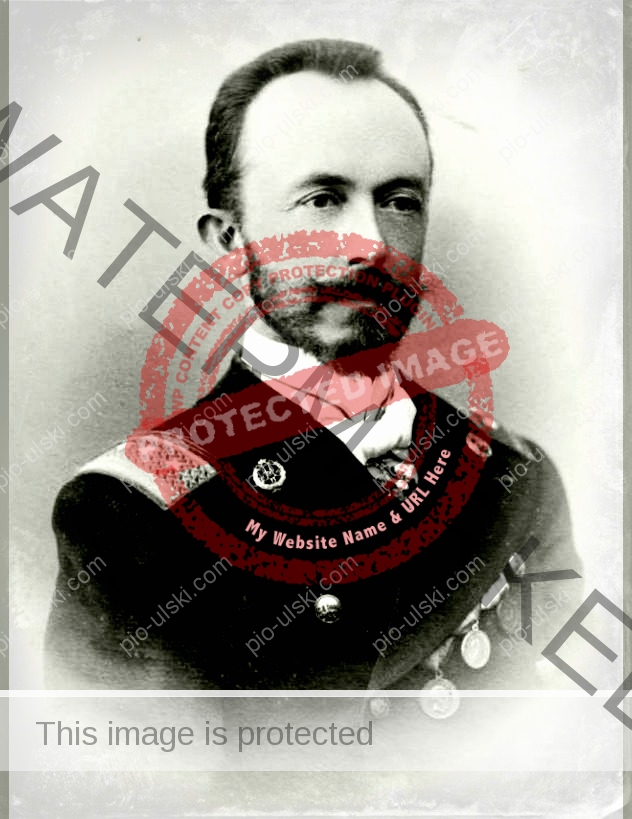
I would imagine my father’s grandfather would have had a similar uniform, although there was another version of the uniform which had the same lapels attached to the coat’s collar, as per this photo …


There is a Russian Wiki page which shows the Table of Ranks but you can read the English translation, via Google, HERE.
I am once again blown away by the kindness of people I don’t know personally but know via the Facebook group I started 6 years ago.
My young friend from Belarus sent me information about my great-grandfather’s death and where he was buried, plus information about the church and cemetery he was buried in! It was just so sweet of her to do that for me and I am so grateful that she thinks of me when she does her own research about her ancestors! ❤
Wladyslaw Egor (Vladyslav Egorovich) died when he was 60 years old. Unfortunately there was no information about what he died of but his date of death was February 16, 1895. He, as well as his family, were parishioners of the Church of St. Stanislaus (Assumption of the Blessed Virgin Mary) so on February 20 there was a service for him conducted by Canon Podgursky, and he was buried in their cemetery.
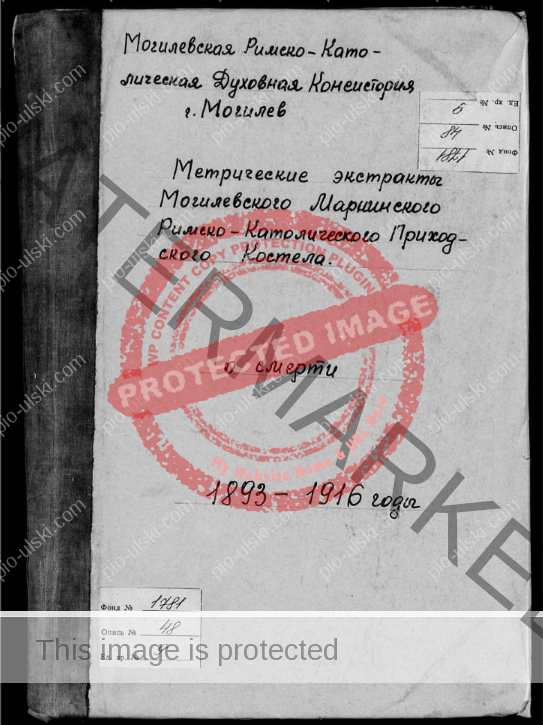
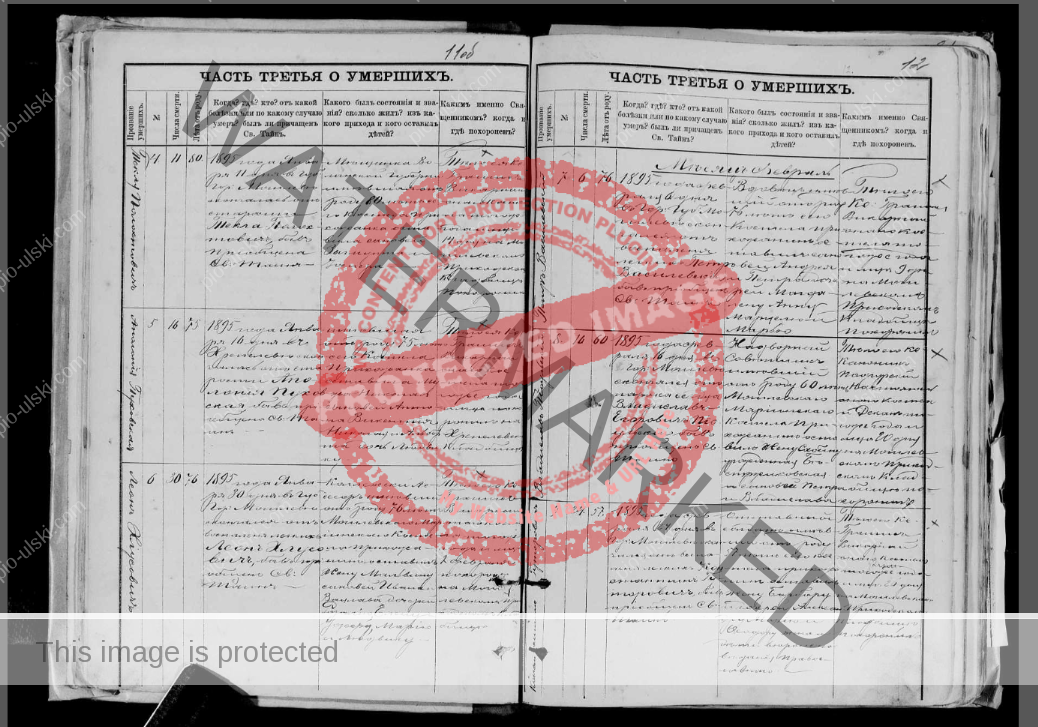
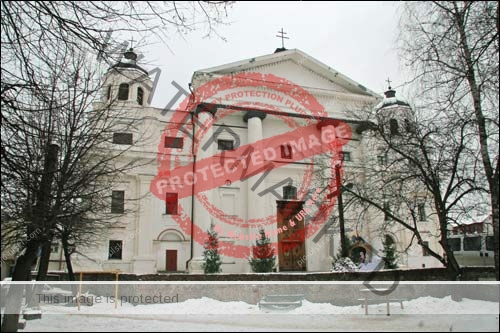
Viktoria also sent me some great links which I am sharing here …
 Catholic church of St. Stanislaus – photos
Poor Belarus ?
Like many other countries in Eastern Europe, it suffered through WWI, then the Soviets invaded and turned it into a communist satellite, then – boom – WWII and it was overrun by the Nazis! ?
According to Wiki, Belarus lost a quarter of its pre-war population in the Second World War, including practically all its intellectual elite.
Belarus was occupied by the Nazis from June 22, 1941, until August 1944, when it was “liberated” by the Soviets. It remained a Soviet satellite until the Soviet Union collapsed and Belarus finally became independent on August 25, 1991 ?
You can imagine how many historical papers were lost during those times of war and neglect and yet Viktoria managed to find information about my great-grandfather! Amazing ?
Pio-Ulski.com claims no credit for any images posted on the site, unless explicitly stated.
All copyright goes to their respective owners.