
Wladyslaw Pio-Ulski ~ 1878-1932
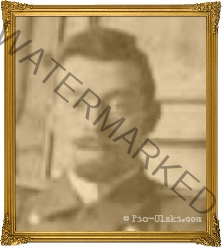
ПИО-УЛЬСКИЙ
Wladyslaw’s family tree …

His great grandfather was Alexander Pioulski, who was a noble landowner in Belarus.
Alexander was a member of the Polish-Lithuanian nobility and an official in the noble Military-Civilian Commission of the Voivodship of Polotsk (currently in Belarus) at the time of the final dismemberment of the Polish-Lithuanian Commonwealth by Imperial Russia. Upon his death, Alexander’s will stipulated that his eldest son would receive the manor and associated serfs, his middle son a sum of money to buy a folwark (which is a Polish concept, meaning «noble farm»), and nothing but his blessing for his youngest son Jerzy (Egor). He justified this will the fact that he had already spent much money on Jerzy’s education to become a lawyer (and later judge) in Mogilev.
His grandfather was Jerzy-Grzegorz – the Russian version of his name was Igor-Grigori Alexandrovich – who was a judge and landowner, and his father was Wladyslaw Jerzy (Russian version, Vladyslav Igorovich), a mathematics teacher and secondary school inspector, as well as being a landowner.
His mother was Sabina Bronislawa Biestrzykowska, who came from a noble family in western Poland.
 |
 |
1893
Wladyslaw’s father managed to “reclaim” noble status for his family in 1893.
He was baptised in Novorzyev by Father Grigorii Gutovskii on October 9, 1878 and his godparents were Nobleman Joakim Ronilovich and his wife, Teresia.


Vladislav’s diminutives would have been Vlad, Vladik, Vladya. I wonder what his parents or brother used to call him? Vladik?

The city is mentioned in historical sources since 1267. From the 14th century it was part of the Grand Duchy of Lithuania, and, since the Union of Lublin (1569), part of the Polish-Lithuanian Commonwealth, where it became known as Mohylew or Mogilew. In 16th-17th century the city flourished as one of the main nodes of the east-west and north-south trading routes.
Coat of Arms for Mogliev In 1577 Polish King Stefan Batory granted it with city rights under Magdeburg law. In 1654, the townsmen negotiated a treaty of surrender to the Russians peacefully, if the Jews were to be expelled and their property divided up among Mogilev’s inhabitants. Tsar Aleksei Mikhailovitch agreed. However, instead of expelling the Jews, the Russian troops massacred them after they had led them to the outskirts of the town. After the First Partition of Polish-Lithuanian Commonwealth (1772) it became part of the Russian Empire and became the centre of the Mogilev Governorate.
In the years 1915–1917, during World War I, the Stavka, the headquarters of the Russian Imperial Army was based in the city and the Tsar, Nicholas II, spent long periods there as Commander-in-Chief.
[Source: Wikipedia]


Since the Pio-Ulskis were a noble family in Mogilev, I’d say it would be a certainty that when the Tsar and his family came to the city during WWI, I assume they would have been involved with looking after or entertaining the Imperial Family. However, Wladyslaw’s father died in 1895 so perhaps his mother was part of the welcoming party but not actually entertaining the Imperial Family 🤷♀️
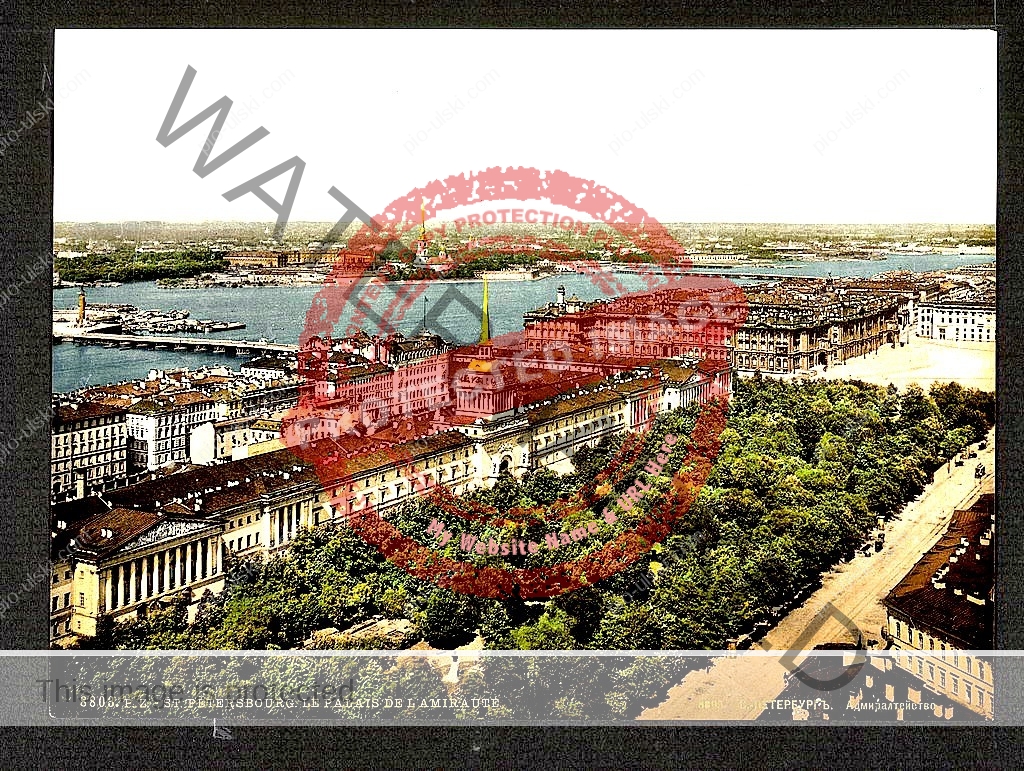
I found a link to a Russian site which had a list of residents in St Petersburg in the beginning of the 20th Century and Wladyslaw’s name was listed. This must have been when he was at the Marine Engineering College, although I would have thought he’d have to bunk down on base …
«PIO-ULSKY Vladislav Vladislavovich. He was born on September 28, 1878 Ml. engineer-mech. (1901). Manufactured in engineering mechanics Art»
In Russian «ПИО-УЛЬСКИЙ Владислав Владиславович. Родился 28 сентября 1878 г. Мл. инж.-мех. (1901)»
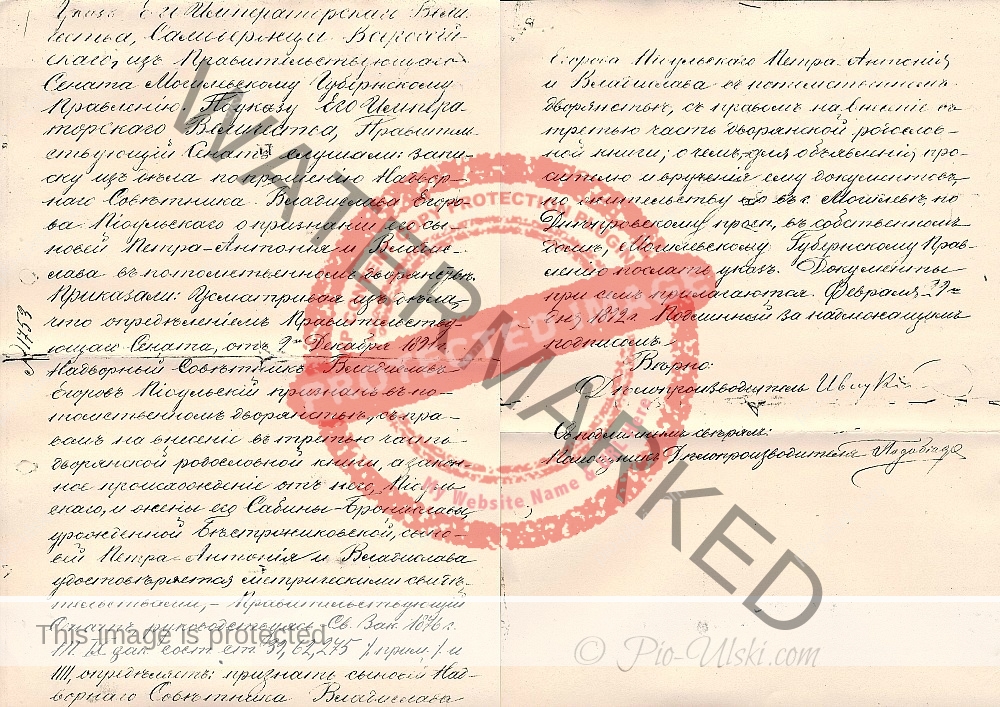
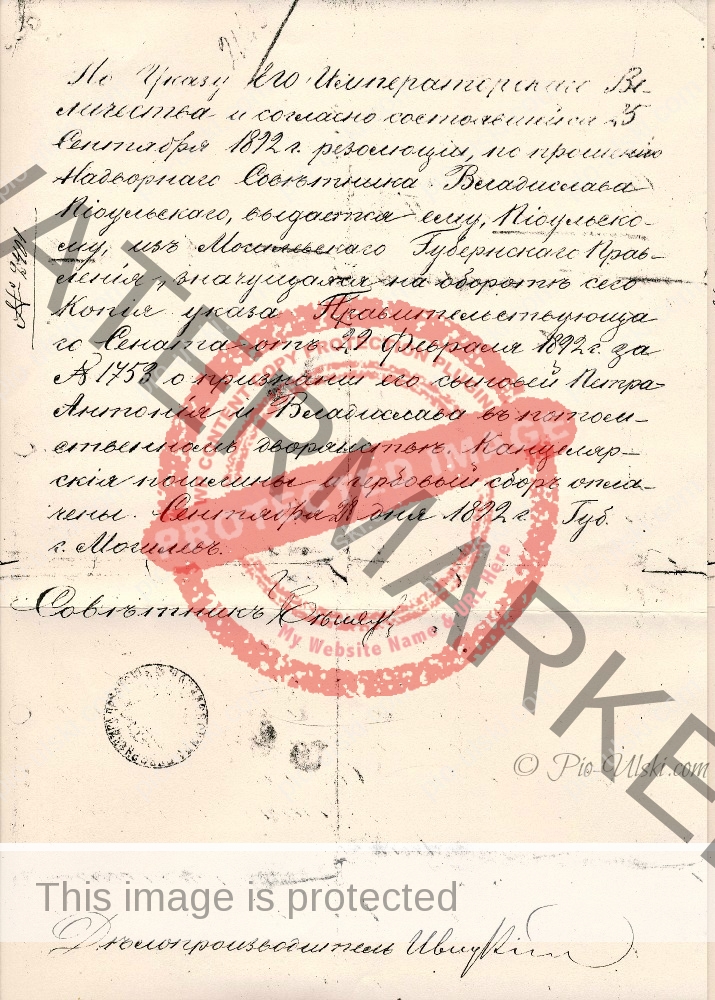
The document shown below, dated 1891, was something which George had managed to hold onto despite revolutions and wars and it’s a declaration by his grandfather to the Russian Imperial Court acknowledging his sons Piotr-Antonii’s and Wladyslaw’s line of succession and their claims to the ancestral home and whatever else the family had.
This is the translation of the document …
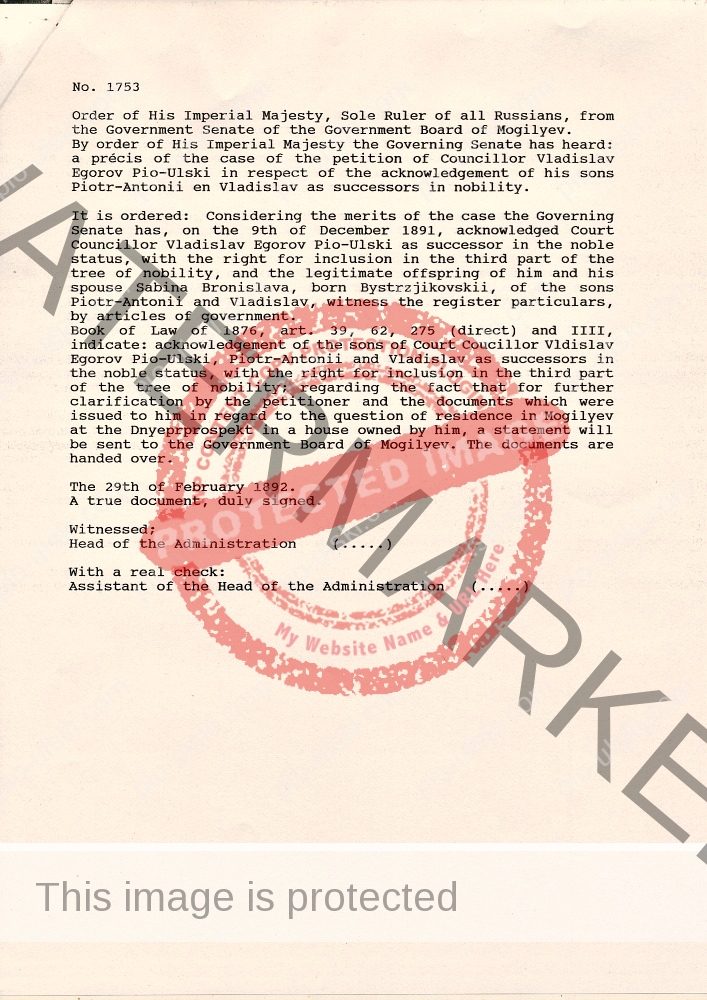
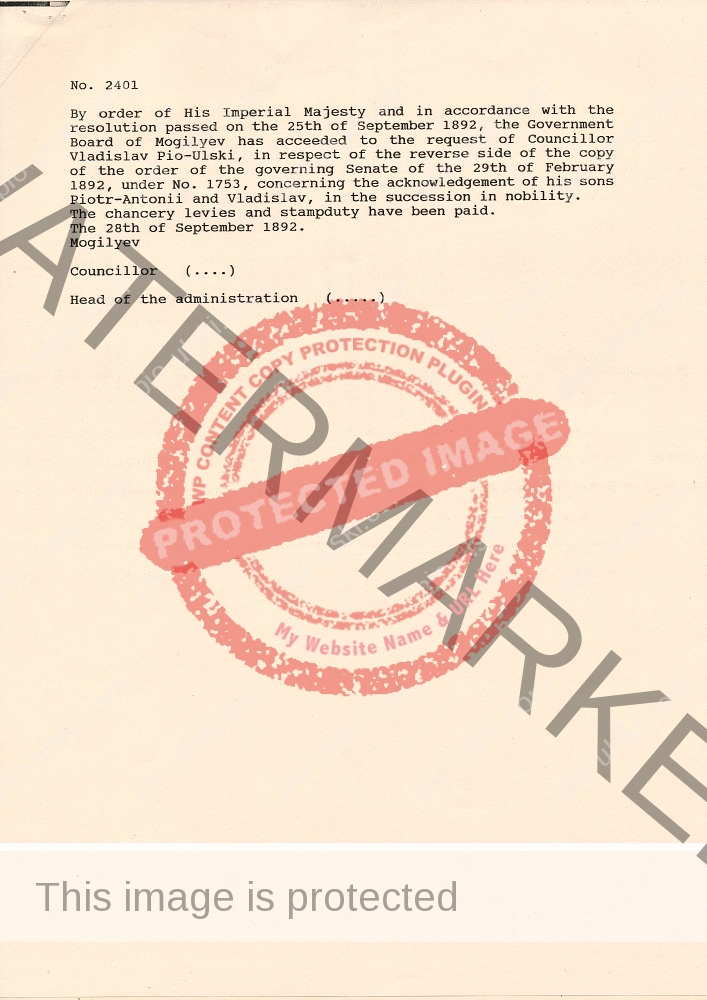
And here’s another document which George kept of the Tsar’s approval of his grandfather’s petition to have his sons’ nobility claim acknowledged …
with the translation …
There are so many holes in the story about Wladyslaw as we have no firsthand information about what happened to him from the time he left his family in Vladivostok to when he ended up in Poland.
Let’s see what we do know …
He joined the Marine Engineering College in 1896 and graduated 5 years later – in 1901.
He was a Junior Mechanical Engineer on the «Rurik» in February 1903.
In 1904 Russia was involved in the short but disastrous Russo-Japanese war but war was in the air from the beginning of the decade. All seamen and engineers who graduated were sent to the Pacific Fleet so I’m wondering about Wladyslaw’s time with the Black Sea Fleet.
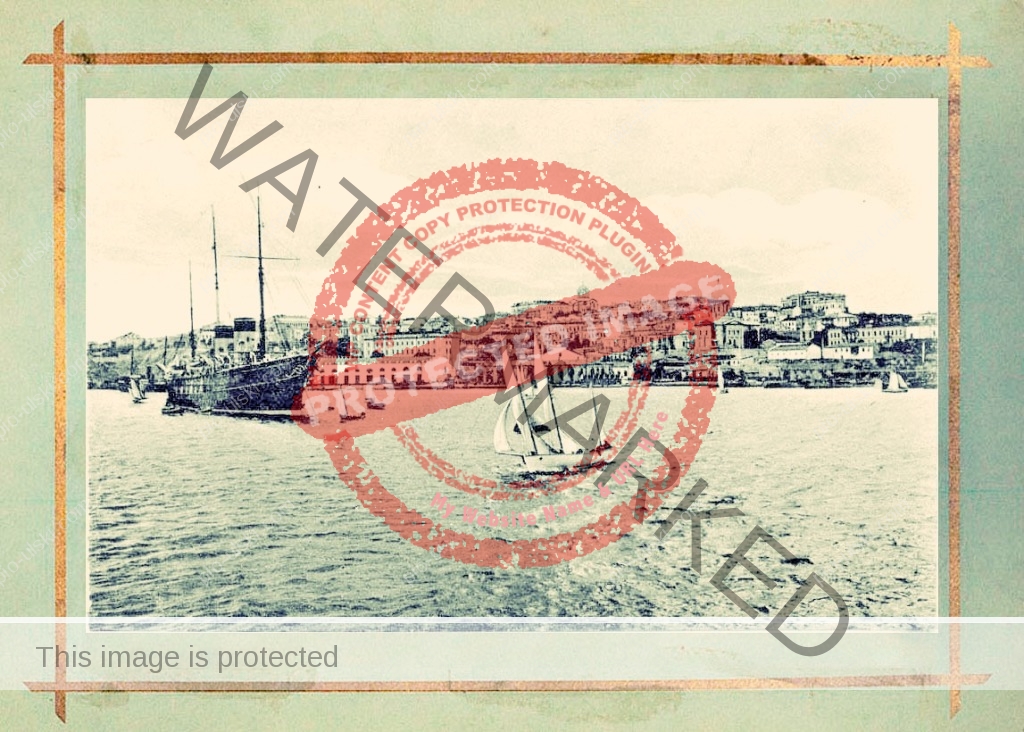
If he went to Sevastopol after graduating, it would seem obvious that he would have met Maria Makeeva, courted and eventually married her. Lyova was born in 1905 and I think the family would have been living in Crimea at the time. I’ve come to that conclusion only because George was born in Odessa in October 1910 and then christened in Vladivostok in January 1911.
Now, according to Willem, my nephew ….
«In 1916 Wladyslaw was stationed with the Black Sea fleet and his family moved to Vladivostok. During 1917 he was transferred to the White Sea (Archangelsk) where he participated in the White movement and combat against the Bolsheviks. In 1919 he was evacuated by the British General Ironsides together with Allied Intervention Troops, and he subsequently made his way to Poland, his mother’s country of origin, by way of Paris. Upon arrival in Poland he joined the Polish Navy.»
I don’t think Willem has that date right. Why would the Pio-Ulski family move from Crimea in 1910, with my father being born in Odessa in October and christened in Vladivostok in 1911 but Willem infers that the family moved after 1916.
My impression was that Wladyslaw was transferred to the Pacific Fleet so his family moved to follow him. He
So he didn’t have a clue what happened to his family after his 1917 posting and, from what my nephew found out, when Wladyslaw was in Poland and fighting the Bolsheviks there, he was also desperate to find his family.
He wanted to go back to Vladivostok to track Baba Manya and his children down so applied to the Soviets for a visa. However the Soviets put a caveat on issuing this visa … «give us military information in your department and then we’ll give you a visa, not before!»
Foolishly, oh so foolishly, he agreed to the Soviets‘ instructions and passed over some state secrets to the enemy 😠
He was caught and sent to trial 😧
Apparently the prosecution and judge realised why he did what he did — trying to reunite with his family, or at least going back to Russia to find out where his family were — and so didn’t throw the book at him.
The judge had to sentence Wladyslaw but gave him a much lower prison sentence than if he had just been a dastardly, snivelling traitor selling secrets for cash! What a fall from grace for my grandfather!
I wonder what his mother or brother – if they were still alive – thought about this! And I’ll bet my last cent that this was the reason why my father decided to change his name to Parks!!
He must have been absolutely mortified when he heard about this through the grapevine in Shanghai and probably wished he could have dropped through the floor with shame! How awful 🤦♀️
So, Wladyslaw was imprisoned and what happened to him is still a question mark. I hired a Polish researcher to help me find out but he turned out to be a dud.
Never mind! I shall continue to search!
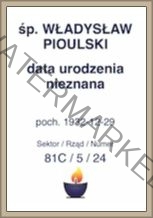
Well once again, my delightful genealogically-minded nephew, Willem, came to the rescue! While in Poland earlier this year (2023) he found a new “Find-A-Grave” website so added his great-grandfather’s name and to his utter surprise, it showed where Wladyslaw was buried! Apparently he’s interred at the Brodzienski Cemetary in Warsaw and his burial date was December 29, 1932! Willem thought that our ancestor died some time around Christmas as it takes 4-7 days to be buried in Poland after one’s death.
He sent me this screenshot …
Found this on a Russian site with books …
Officers of the fleet … participants of the RYAV. Part 4
by Alexey Nikolaevich ChelombitkoOfficers of the fleet, Corps, Civil and Medical ranks, Marine Corps priests are participants of the Russo-Japanese War of 1904-1905.
Pio-Ulski Vladislav Vladislavovich, September 28, 1887, ml. engineer-mechanic (02.07.1901), Lieutenant KIM (01.01.1905), Lieutenant CIM for resignation (26.12.1905). “Rurik” (p.m. item of the court of mechanics 23.02.1903 – 10.06.1904). He was convicted on 10.06.1904 for failure to appear on time from the dismissal to the military. time. – Mechanical Engineer Art. lieutenant (06.12.1914). In the White troops Sev. front. From October 1918 on the flotilla Sev. The Arctic Ocean. In 1919, he was evacuated with British troops to Europe. Through Paris he moved to Poland. He entered the service in the Polish fleet. Worrying for the fate of his wife and children appealed to the Soviet authorities about the possibility of returning to their homeland. For this opportunity, secret information about the Polish fleet, which he provided, was requested from him. He was arrested by the Polish authorities and imprisoned. Further fate is unknown.
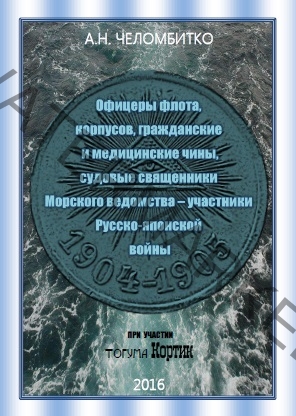
Unfortunately I think Chelombitko found the information from my website 😧 Wah! I wanted to learn something new about my grandfather 😟
This entry was on the RIA 1914 website :
Пио-Ульский Владислав Владиславович
Даты жизни: 1878 –
Биография:
Участник ПМВ. Сын Надворного Советника Могилевской губ. Николаевское инженерное училище 1901. Старший лейтенант, инженер-механик. В белых войсках Северного фронта; с окт. 1918 на флотилии Северного Ледовитого океана.
Семья:
Брат, Пио-Ульский Петр Владиславович.
Чины:
штабс-капитан на 01.09.1914 – Ревельская инженерная дистанция
Награды:
Дополнительная информация:
-Поиск ФИО по «Картотеке Бюро по учету потерь на фронтах Первой мировой войны 1914–1918 гг.» в РГВИА
-Ссылки на данную персону с других страниц сайта “Офицеры РИА”
Источники:
Фотографии:
———————————–
And here is the English translation :
Dates of life: 1878 –
Biography:
Member of PMV. The son of the Nadvorn Advisor of the Mogilev lips. Nikolaev Engineering School 1901. Senior Lieutenant, Mechanical Engineer. In the white troops of the Northern Front; from approx. 1918 on the flotilla of the Arctic Ocean.
Family:
Brother, Pio-Ulsky Peter Vladislavovich.
Chins:
headquarters captain on 09/01/1914 – Revelian engineering distance
Awards:
Additional information:
-Search for a name for « Card library of the Bureau for the accounting of losses on the fronts of the First World War 1914 – 1918 » in the WGVIA
-Links to this person from other pages of the site “RIA Officers”
Sources:
Photos:
A great site with lots of photos of the «Varyag» …
Photochronograph : Legendary cruiser “Varyag”
Pio-Ulski.com claims no credit for any images posted on the site, unless explicitly stated.
All copyright goes to their respective owners.