
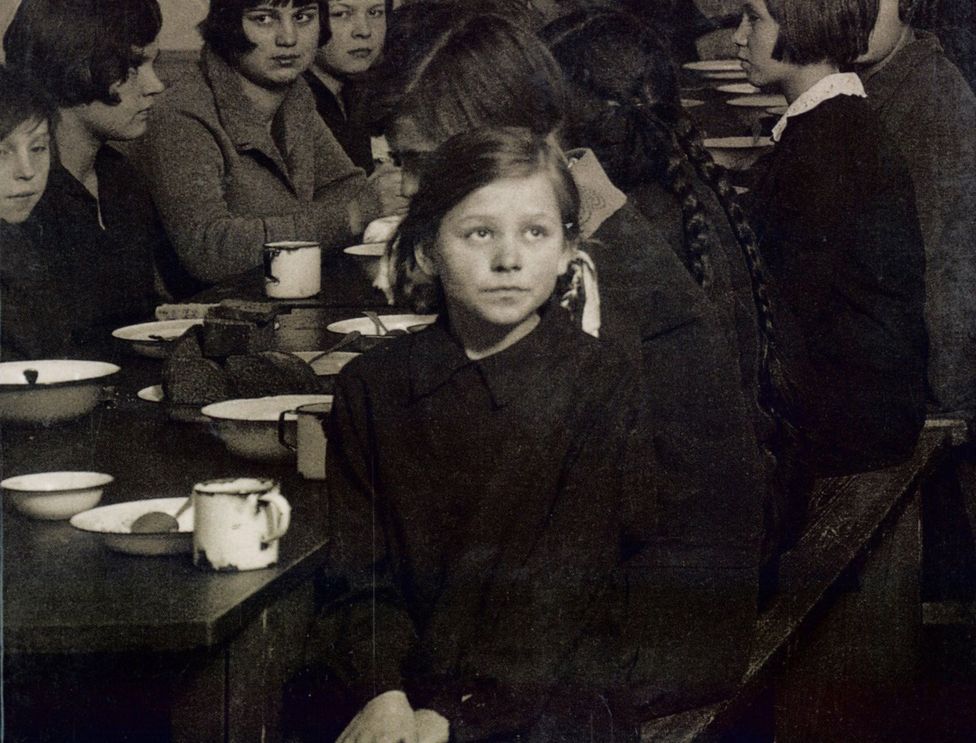
 © ZEMGOR
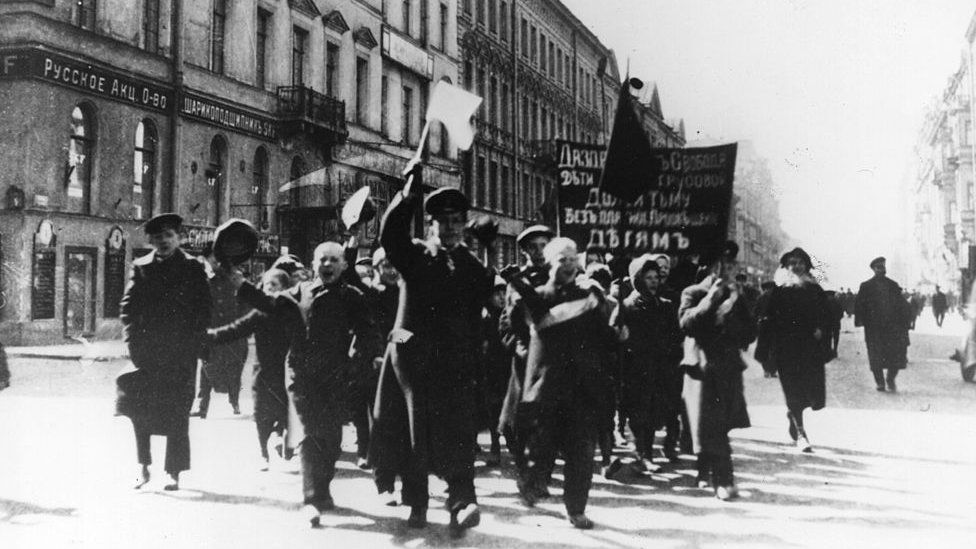
 “Russia visited the famine, pestilence and disease, she became hudoyu, pale, ragged beggar, and many have left her in tears. They ran away from her and the rich , and the poor” . So in their writings the events of 1917 were described by the children of Russian emigrants.
Wednesday December 12, 1923 began as an ordinary day in the Czech gymnasium of a small town of Moravska Tsebova on the border with Germany. Only at the desks were not quite ordinary pupils – boys and girls, boys and girls of different ages and estates, but with a similar history behind them: they all left Russia, driven by the revolution.
Instead of two ordinary lessons that day, the children were asked in two hours to write that they remembered about their life in Russia.
Gymnasts aged 8 to 24 years described how their world collapsed when “Russia was approaching the fatal line with rapid steps.”
Reading stories, you smell, you hear shots, you see a broken children’s doll, abandoned dachas and luxury apartments left in a hurry; Together with the children you board ships to Novorossiysk, to the Crimea, and from there even further – to Europe, America, the Middle East.
The idea to write down the memories of schoolchildren came to mind the director of the largest Russian emigrant school in the town of Moravsk Trzebov Adrian Petrov.
“My memories from 1917 to the day of admission to the gymnasium” – that was the theme of the composition in the Czech gymnasium. Petrov’s initiative was picked up by another 15 lyceums from Turkey, Bulgaria, Yugoslavia, the Czech Republic and other countries that accepted the children of Russian refugees. Young authors were given complete freedom of thought and creativity, they did not limit their time in any way.
In total, 2403 essays were written, which for many years were kept in the Pedagogical Bureau in Prague.
“The language of children’s writings is truthful to the point of trembling, it feels as if the skin is torn off from children, they feel the heaviness of history stronger and sharper than others.” This is the only historical document of this scale, “says the granddaughter of Russian emigrants and a specialist in the history of Russian emigration Catherine Klein-Gussef, who published a collection of children’s works in French a few years ago.
Emotionless
Almost complete absence of emotions in the texts in a very detailed description of events struck psychologist Anna Sossinskaya, co-author of the collection.
“When they did not shoot for a long time, I was bored,” writes one boy.
“We were shot three times a week three times: on Thursday, Saturday and Sunday, and in the morning, when we went to the market to sell things, we saw a huge strip of blood on the pavement, which the dogs licked,” another describes their everyday life.
This trait is akin to the children’s writings of the 1920s with memories of the war camps in the Balkans or captives of the concentration camps of the Second World War.
“Emotion arises from the reader, and the narrator communicates the experience at times with increasingly scrupulous details, but without emotion,” says the psychologist.
Violence, cruelty, tears, death, illness, hatred – these stories have everything that should not surround the child in normal conditions, comments the psychologist. Because of this feeling of detachment, a look from the outside.
As Anna Sossinskaya explains, the great granddaughter of Russian emigrants herself, a small child can not cope with a heavy emotional burden and is removed.
Compositions resemble a session of psychotherapy, where a person, speaking of the experience, ceases to be a participant in events and becomes their spectator. One of this session, of course, is not enough to completely get rid of nightmares, but this is the first step, the psychologist says.
 © ZEMGOR
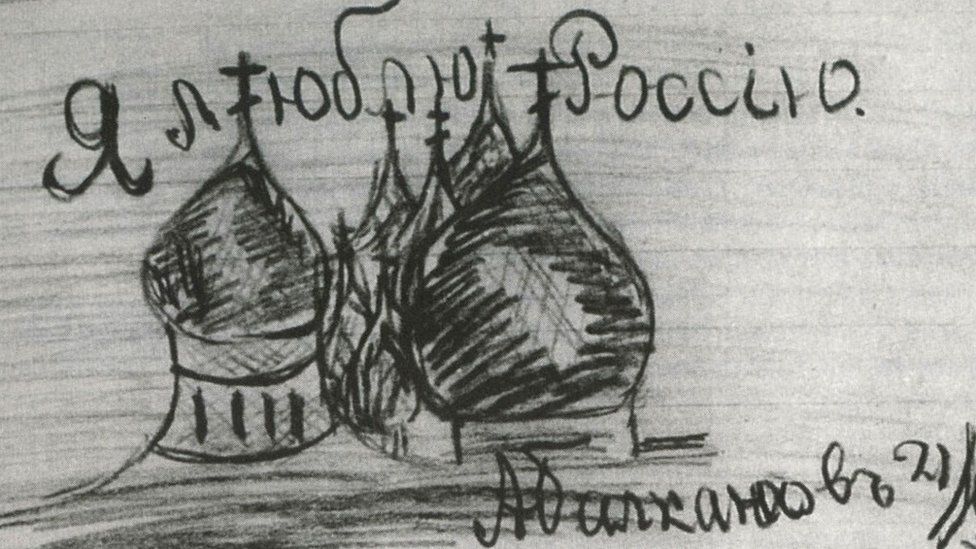
 In one of the works the youth of 18 years recalls that he felt when he first had to face the death of a close person – his brother. A short story is devoted to the memory of the search for a scarf.
Thus, the psychologist says, the boy is trying to detach himself from the news about death.
“I first hid my head in a pillow (how it fell into my hands, I do not remember, instantly a damp spot appeared on it, then I thought:” Why do I get a dirty pillowcase “and started looking for a handkerchief.” (…) Finally, the pocket was I noticed that I was crying, I noticed that I was crying, I even thought it was terrible, why are we crying? ”
Anna Sossinskaya, who now works with the children of refugees from Syria, stresses that the process of psychological recovery after long wanderings and loss of the motherland is not a fast one.
You need to respect the rhythm with which the child is ready to begin rehabilitation. Cope with the trauma helps stories or drawings.
To give the paper some of the heavy psychological burden, to throw out the accumulated experiences – including for this purpose the teachers of foreign schools of the beginning of the century asked their students to write memoirs, confirms the historian Catherine Klein-Gussef.
Some children vehemently admit that memories are painful: “And then the most terrible horrors began, about which only in fairy tales they tell, but my tooth hurts and I can not write anything else.”
- “I will not describe further.” I really do not want to remember more about my dear homeland and the late pope. “
- “Of course I could describe everything in more detail, but I do not have time.”
- “He grabs my breath, describing these lines of my life, and therefore there is no word to describe all the horror and nightmare of my situation.”
Expulsion and wanderings
According to Catherine Klein-Gussef, reading the stories, once again you understand that the history of the revolution and civil war is a story of suffering and deprivation, cruelty and violence, disease and hunger. The history of the great chaos in which the country was plunged.
 © © ZEMGOR
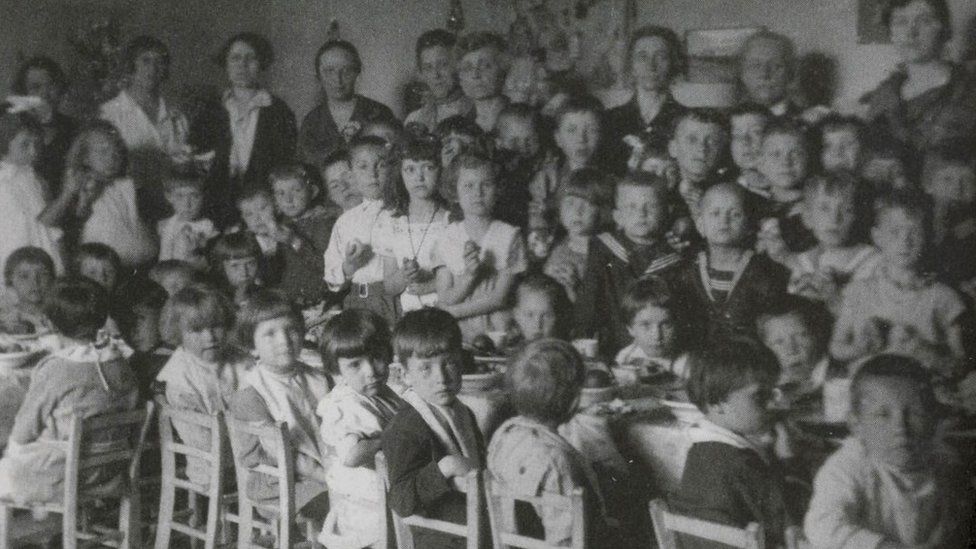
“I moaned only when I wanted to eat, my life during the revolution was similar to the life of an animal that had no worries except the stomach, and so I imperceptibly reached Serbia,” the topic of hunger and physical discomfort is affecting many schoolchildren.
- How much: pre-revolutionary Russia in figures
- Revolution in Russia: the fateful events of 1917 day after day
Some of them know exactly who they blame for the tragedy, others mostly convey their feelings and feelings, refraining from analyzing the reasons.
- “About adults, adults! Not only do you cut yourself, you poisoned our children’s souls, filled us with blood, made me a thief, a murderer … Who will take my blood off me … I’m scared sometimes at night … Calms me down only what I did all this by youth, and the belief that there is Someone Merciful who will forgive and not condemn as people! “
- “The horrible image of a young beautiful girl lying in a dirty puddle of blood on a wide dark street with a cranial skull and hands clutching a cane hit me and made me think and ask myself:” Why? “For what and for what did my poor mother, kind father and a huge part of the Russian people? Torture was a tricolor flag in the mud … It all started spinning in a frenzied whirlwind … “
- 1917 in the life of the Giraud family: arrests, Tolstoy and exile
- 1917 in Russia: what the world press wrote
Children describe their long journey from Russia and to school in foreign schools. One girl accidentally called her work “short geography” instead of “short biography.”
Almost for all authors – the revolution, the flight from Russia, emigration became the commemoration of the end of childhood, the loss of the motherland, and often – of relatives and friends.
- “To all of you can get used to. I got used to the cold in and to the famine, and the frozen corpses.”
- “A year later I was already a real military man, but how disappointed I was, I thought to find some kind of triumph and a holiday in the war, but I saw only corpses . “
With childish immediacy
Children do not hide their ideological beliefs, inherited from their parents.
In the texts, antisemitic statements or the pejorative attitude toward Ukraine, which is characteristic of the then imperial ideology, often slip through.
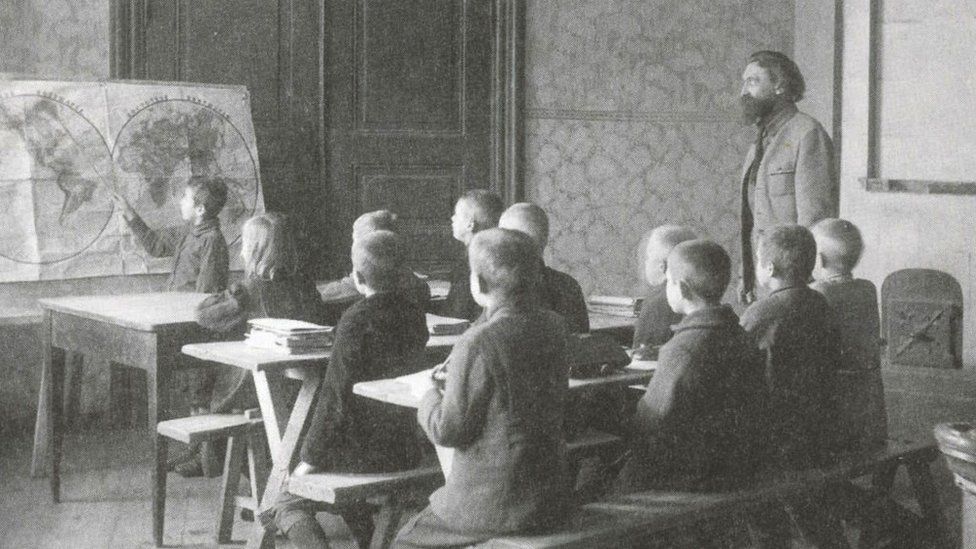
Basically, the authors of the stories are the children of the urban intelligentsia. Several texts were written by the descendants of aristocrats and landlords.
The writings show a longing for the village and home. In one story, the boy describes deprivation: his family had to cram into five rooms, and to carry the suitcases themselves – even the porter was not.
 © ZEMGOR
Another group is the children of the Cossacks and the military.
As the compilers of the collection note, unfortunately, the reader does not have enough essays for schoolchildren left in Bolshevik Russia for the balance.
The only works that have survived to this day are the stories of white emigre children.
And although all the authors are united by contempt for the new government, the children do not try to convince the reader or find the guilty ones, but only retell the episodes from life, showing how their little history was woven into History with a capital letter.
Feeling of Russia
As Anna Sossinskaya, a psychologist, notes, children – unlike parents and teachers – said goodbye to Russia forever.
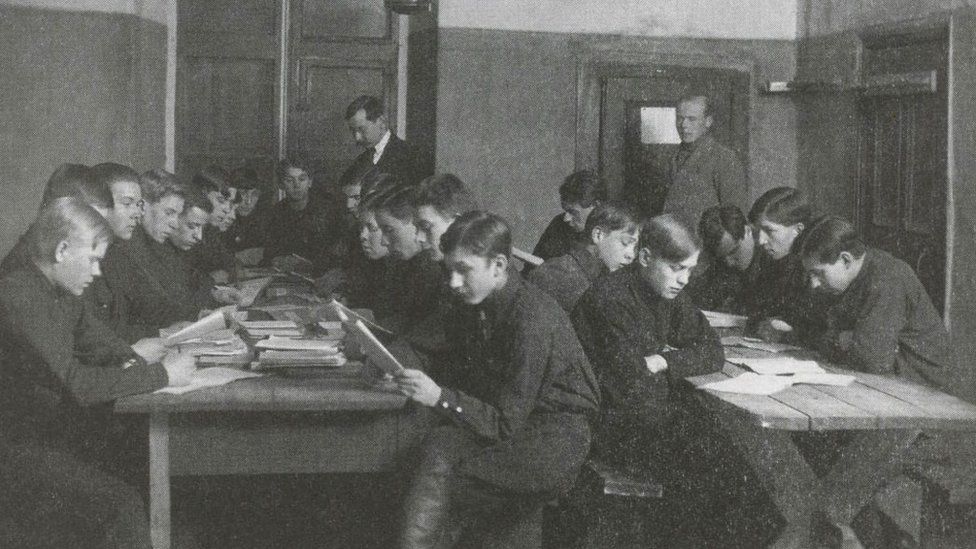
Russian gymnasiums abroad at that time lived almost a missionary task to preserve the feeling of motherland and Russian language that was slightly warming in children.
 © ZEMGOR
As the nineteenth-century Russian historian and publicist wrote, Prince Peter Dolgorukov, one of the first to analyze the works, children who do not study at Russian schools, are quickly “denationalized, sometimes with conscious or unconscious connivance from their parents.”
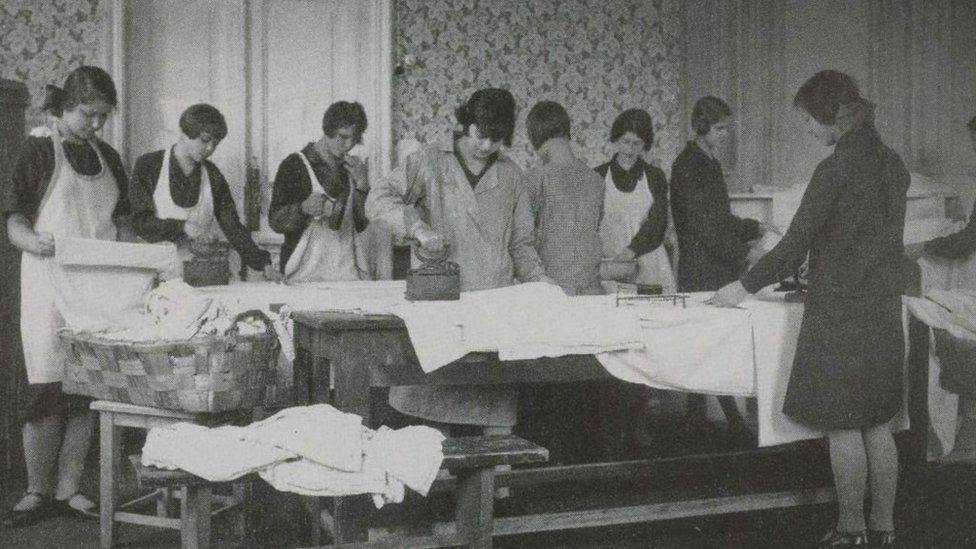
Most Russian emigre schools were boarding schools. Teachers of those times believed in the therapeutic effect of the hostel. “The only science I learned in Trzebov was the science of the hostel,” Ariadna Efron, daughter of Marina Tsvetaeva, wrote after several years of studying at a Czech gymnasium.
 © ZEMGOR
 Children write about the desire to come and save Russia, to study and work for the benefit of their lost homeland – they console themselves with the idea of an imminent return, but rather hypothetical than real.
We do not know what happened to them afterwards. Whether someone returned to their homeland – is unknown.
- “I still hope to return to Russia, but not to the Bolshevik, but to Russia, my own, national.”
- “We have lost our dear, dear Motherland: we have one idea: the restoration of the desecrated Motherland and the restoration of the Sovereign Monarch.”
- “I have a consciousness that I should finish my education well, to help the pope and our dear Motherland with everything that I can.”
- “It was difficult for us at first in unaccustomed conditions and without language, especially since we appreciated our school, this is for us an island of the Motherland, and if Russia goes into the distance our school will not let it completely break away from the past.”
- “When I was on the boat, I cried, feeling that I was leaving my Motherland for a long time.”
- “I am very happy that I can learn and be among my native Russian people.”
Refugees then and now
It was in the 1920s that modern border control systems began to operate, identification cards and visas were introduced everywhere.
Every now and then, in the stories of children, allusions flicker almost to the modern realities – as they secretly, at night illegally crossed the border, how they were stopped and prevented from passing, because the necessary documents were missing.
 © AFP
© AFP At the beginning of the 1920s, a refugee passport was developed, which was designed on the initiative of Fridtjof Nansen specifically for Russian refugees, but in some Eastern European countries it was not yet in operation, so many emigrants from Russia had problems with documents.
- “In the same place, the Kiev and Odessa Corps also wanted to cross (the border), but they were fired by Romanians from guns, and they were not saved by the unfortunate ones.”
- “At night, barefoot, without any things, we crossed the border.”
 © HULTON ARCHIVE
- “And since he waited impatiently for this paper, this paper came when he was already dead and lay on the table near the icon.” (It was about permission to leave)
- “You go to the Government Commission, and you tremble , and you are afraid that you will be arrested and sent to the Soviets for nothing.”
- “We drove so for a whole month and we came to Poland.In Poland we were imprisoned for three months, they fed us there with one loaf and herrings, then the pope found a passport and on this passport we got out of captivity”
- “On the border, we rummaged all things and even my brother took a toy revolver”
The way of Russian refugees in the 1920s is reminiscent of the largest migration crisis since World War II, which Europe is experiencing nowadays.
The Balkans played an important role in the fates of the children of that time and the present, true, to the exact opposite – then the Balkans opened wide the doors for the children of emigrants, which did not happen now.
“I would like to say that this will not happen again, but unfortunately, I can not .It’s enough to just wish it, as soon as something in the world is going on, which brings everything to nothing.” This desire does not come true. conflicts, and flight will never end, no matter where it happens, whether in Europe or its periphery, in Syria or Myanmar, but these writings do their work, they make you think. You can only offer one advice – to listen to the voices of the weak and disadvantaged “, says historian Catherine Klein-Gussef.
All quotations from the children’s writings are quoted in the collections Children in Exile compiled by Catherine Klein- Goussef and Anna Sossinskaya, Children of the Russian Emigration by the compiler Lidia Petrusheva, Children of Emigration, Memoirs, 1925, Memories of Refugee Children from Russia the editorship of Sergay Kartsevsky. (Spelling and punctuation of authors preserved).
- Feeling of revolution
“I did not take part in the first days – but I remember, I vaguely remember, as from another, past life, this bloody rumble of red banners, these drunken crowds from the spring wind and sun, this unfortunate parody, at random bellowing the factory city and barracks people : “Get up, get up!” – and, God forgive me, I can not think without caustic, sharp, some kind of suction irony: “Yes, they got up …. they got up … and stayed in mud and stench”.
“But then came the October Revolution. As I have aches and heart ached ie , when I begin to describe this period. Although there was no hassle and no one was beaten, I felt that the non-Russian people seized power, treated them with contempt.”
- T yagot s exile, hunger, loss of I close
“I became almost a psychopath, became a moral cripple, illiterate, embittered, fierce at all, intimidated like a forest wolf, I’m worse than a wolf … faith fell, morality fell, all people are a lie, a vile lie, I want to run, run without looking back , but where will I run without money, without knowledge … oh, be damned! “
“Almost all of us Russians know of hunger, so I think there is nothing to describe these gloomy days in which we had breakfast, to wait impatiently for dinner, having dined – dinner, and so all the time.”
- New power
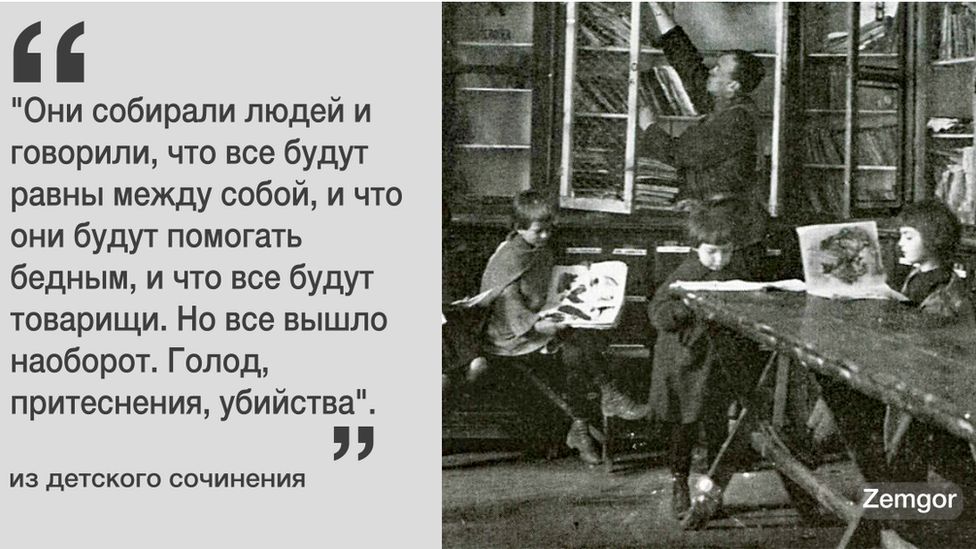
“They gathered people and said that everyone would be equal to each other and that they would help the poor, and that everyone would be comrades, but it all turned out the other way round.” “Hunger, oppression, murder.”
 © ZEMGOR
 “In the battle with the green and red, I was seriously wounded, and this saved me from Bolshevik life.”
“The real revolution and Bolshevism were felt in Kiev only in the spring of 1918. This period remained in my memory forever, the Bolsheviks were advancing from behind the Dnieper, their approach somehow immediately threatened over Kiev without a warning.”
- Military experience
“At first it was quite difficult, and at the sight of the corpses I wanted to run, but afterwards, afraid of losing some prestige, I began to act bravely and flaunt, but in my soul the devil knew what it was.” Before each corpse, I painted myself and my poor mother, I could only see mothers before, and I did not know that these dead people might have wives.) In general, I’m already a real military one year later. But how disappointed I was! I was thinking of finding in the war some kind of triumph and a feast, but saw only corpses. “
- Destruction of the children’s world
“One fine morning, when I was sleeping in the nursery, armed soldiers came in and pulled me off the bed.As I cried, they broke my favorite doll …”
“Everything fell into the mud: morality , and the deep religion that I inherited from my parents, the partisan detachments to which I was a part, broke my soul, I now understand this.” The gross insensitivity to alien suffering supplanted the former meek love for the human person ” .
Children of emigration – how many are there?
In the 1920s, the number of refugees from Russia was estimated at 2-3 million people, later this figure was several times reduced to 600-700 thousand people.
 © ZEMGOR
It was difficult to ascertain how many children there were from the whole mass of refugees. An implausible figure of 400,000 was called. Society Zemgor – a structure created in 1915 on the basis of zemstvos and city dumas, and in the white emigration that helped refugees, cited a figure of 45-50 thousand refugee children.
Historian archivist Lydia Petrusheva, the author of another collection of children’s works, published in 1997, believes that the children were half as many – about 20 thousand.
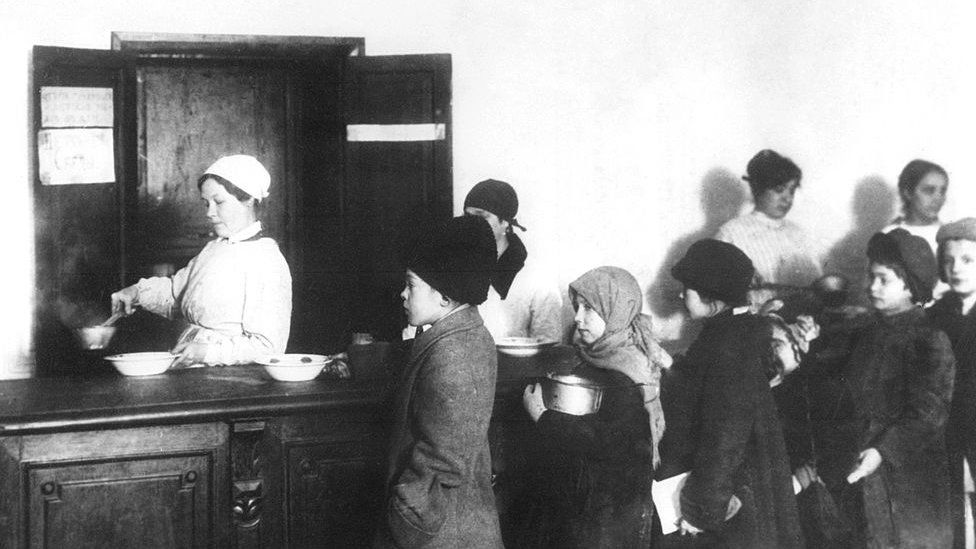
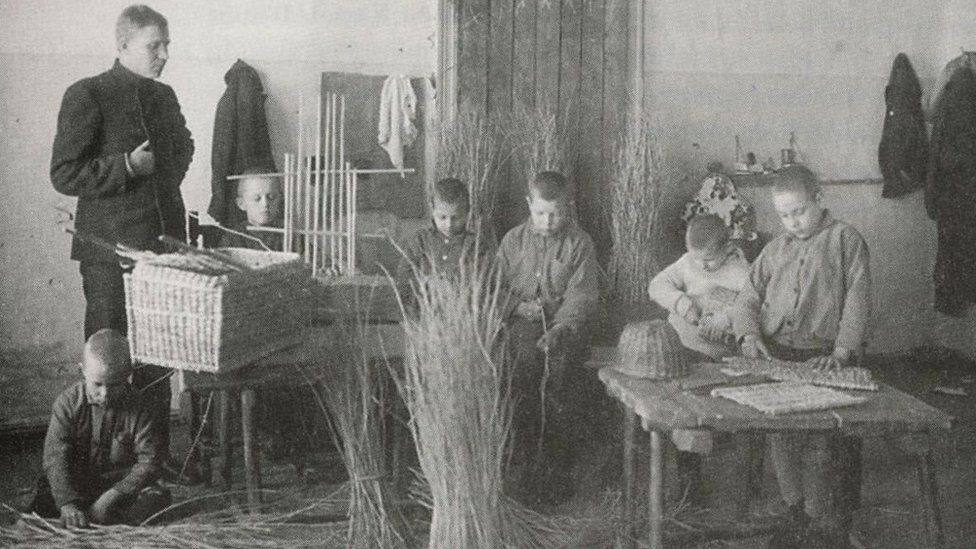
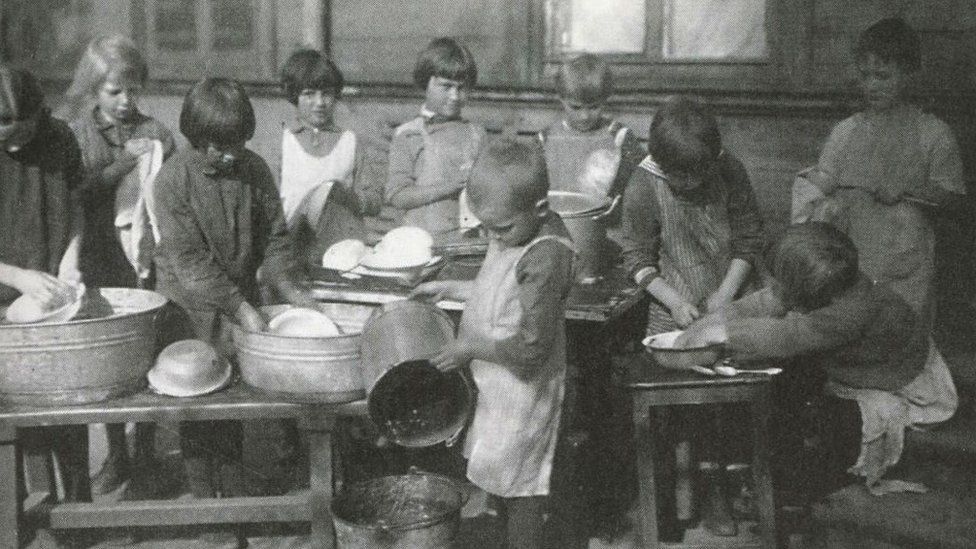
Some of the children were educated in Russian foreign boarding schools, a part – in foreign. Some children were permanently living in boarding schools because they were orphans or did not want to complicate the already difficult financial situation of the family, others attended boarding lessons, but lived at home.
.
